


Printing fifty units at a time is not the cheapest way to make T-shirts. It is not close. Anyone who has priced apparel manufacturing knows that the per-unit cost falls sharply as the run gets longer, and that most of the industry is organized around that fact.
We do it anyway. This is the reasoning, including the parts that work against us.
The economics we are opting out of
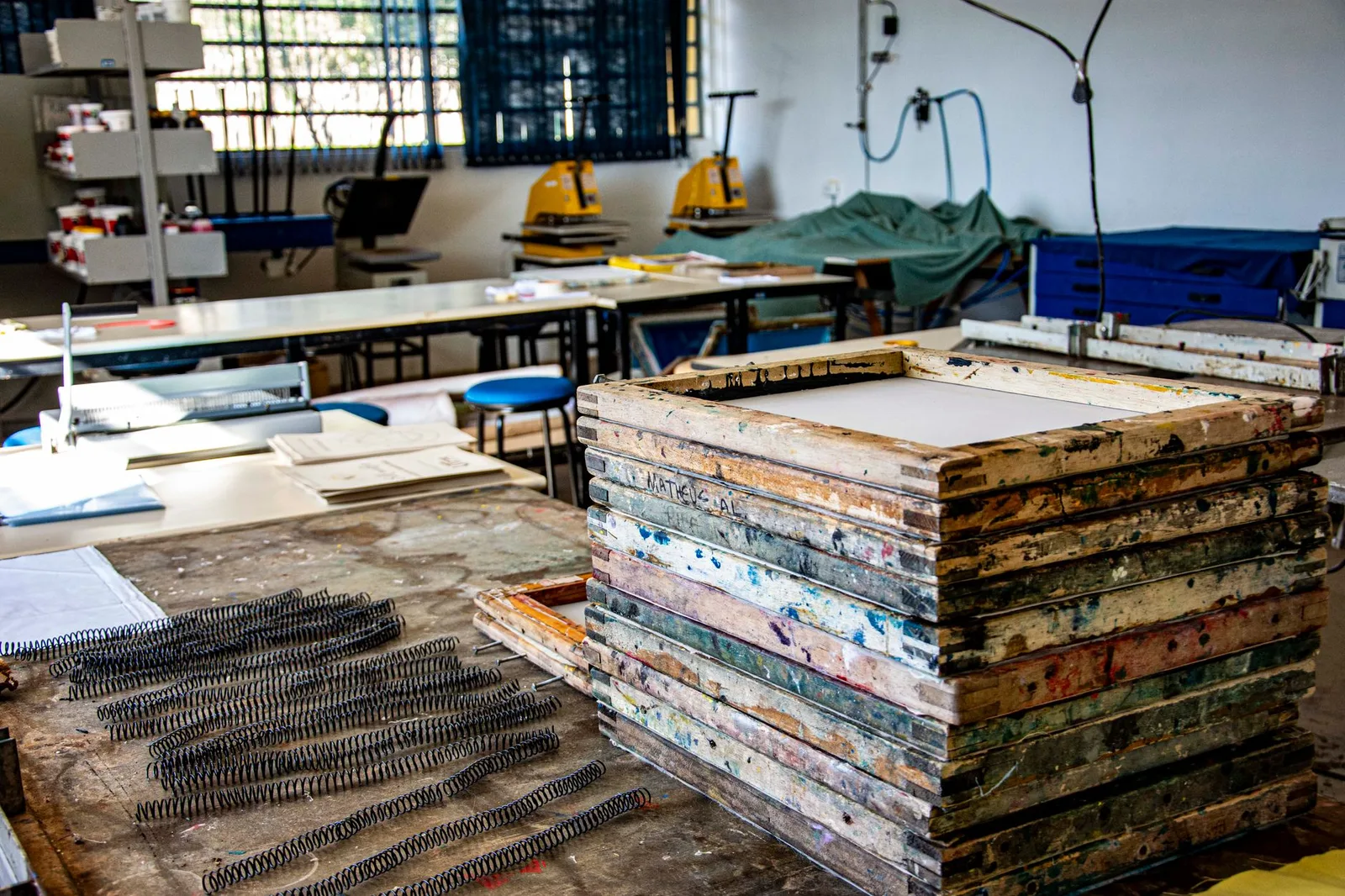
Apparel production has high setup costs and low marginal costs. Screen printing makes this especially visible: you burn a screen for each color in the design, mix the inks, register the screens on the press, and pull test prints until the alignment is right. That work is identical whether the run is fifty shirts or five thousand.
Spread across fifty units, setup is a significant share of the cost of each shirt. Spread across five thousand, it nearly disappears. The same logic applies to fabric, where mills price by volume, and to labor, where a cutting floor would rather cut one large order than ten small ones.
So the incentive runs one direction: print more, pay less per unit, price competitively, make a better margin. That is not a scam. It is just how manufacturing works.
What the long run actually costs
The catch is that the per-unit figure only holds if you sell them.
A run of five thousand shirts is a bet that demand for that specific design, in that specific size distribution, will materialize. Get the total wrong and you are storing shirts. Get the size curve wrong and you are storing mediums while selling out of larges, which is the same problem wearing a disguise.
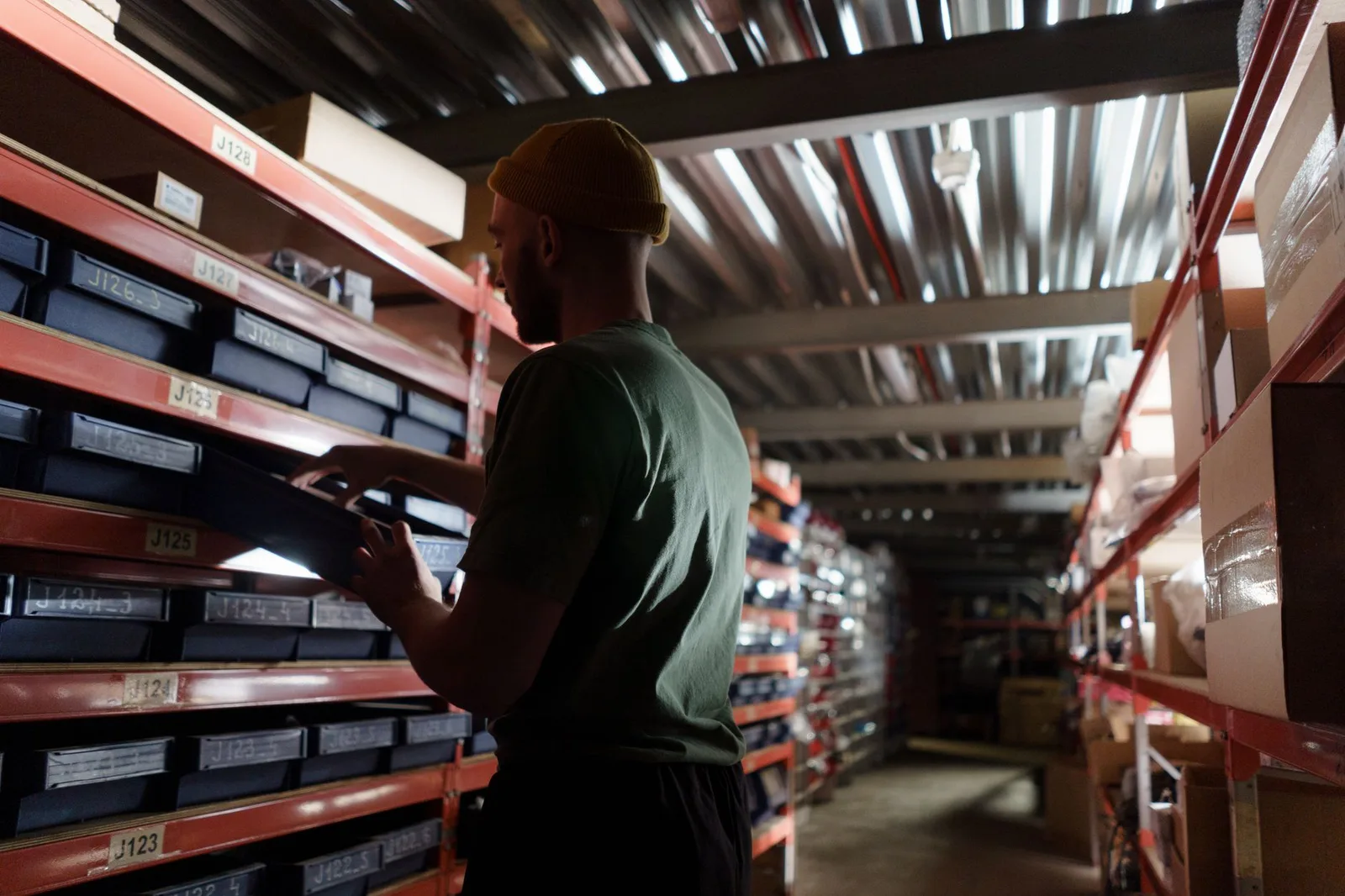
Unsold inventory does not sit still. It occupies space you pay for. It ties up money that could have bought the next thing. And it applies steady pressure to discount, because a shirt in a box earns nothing and a shirt sold at cost at least returns the capital.
That pressure is where a lot of the industry's worse habits come from. Deep discounting trains customers to wait for sales. Liquidation channels move product at a loss. And the end of that road — clothing that is never sold at all — is a genuine problem in the apparel industry, though the figures that circulate about its scale vary a great deal depending on who is counting and what they are counting.
We would rather not be managing that problem at all.
What fifty buys us
We can stop. If a design does not connect, the exposure is fifty units. We learn something and move on. There is no warehouse of a mistake to work through, and no reason to discount our way out of it.
We can change things. A short run means the next run can be different. If the fit runs small, we adjust before the next batch instead of living with it for two years. If a fabric pills more than it should, we change the fabric. Long production runs freeze decisions in place, and the mistakes freeze with them.
Size curves stay honest. With fifty units we can match production to what actually sold last time rather than to a forecast. Nobody ends up with a pallet of XS.
Quality control is tractable. Checking fifty garments properly is a morning's work. Checking five thousand means sampling, and sampling means some defects reach customers.
The parts that are worse for you
I would rather be direct about these than pretend the tradeoff is one-sided.
Things sell out. This is the most common complaint we get, and it is a fair one. If you find something you like in your size and wait a week, it may be gone. That is not a scarcity tactic. It is fifty units doing what fifty units do.
Restocks are not guaranteed. Sometimes the fabric is no longer available in that weight or color. Sometimes the run does not justify a reprint. A design that comes back is a decision, not a default.
It costs more. The setup cost is real and it lands in the price. A five-thousand-unit run of the same shirt would be cheaper, and we would be lying if we said otherwise.
If any of those are dealbreakers, that is a reasonable position, and there are brands built the other way that will serve you better.
What we do to soften it
A few things, none of them a full solution:
- Restocks of core pieces get priority over new designs. The staple items in the tees collection come back more reliably than one-off graphics do.
- We hold back a small number of units from each run for exchanges, so somebody who orders the wrong size is not stuck.
- Size curves are set from actual sales history rather than a standard distribution, which reduces how often the middle sizes vanish first.
What happens to the ones that do not sell
Even at fifty units, some runs do not clear. It would be dishonest to describe a system with no leftovers.
What we do with them, in order of preference: hold them for the next restock cycle if the design is still current, use them as exchange stock for customers who ordered the wrong size, and send the remainder to be worn rather than stored. What we try hard to avoid is the reflex discount, because a design marked down within weeks of release tells everyone who paid full price that they should have waited.
The scale of the leftovers is the point. Fifty units means the worst case is a few boxes. It is a manageable mistake rather than a structural one, and that difference is most of why the model is worth the higher unit cost.
How we decide what comes back
Restock decisions come down to three things, roughly in this order:
- Sell-through speed. Something that cleared in days is a stronger signal than something that cleared over a season.
- Whether the fabric is still available. Mills discontinue colors and weights, and a reprint on a different base fabric is a different product wearing the same graphic. We would rather retire a design than quietly change what it is.
- Returns and complaints. A piece that sold well but generated fit complaints gets its pattern revisited before it comes back, not after.
Print method factors in here too, since different decoration methods have very different setup costs and therefore very different minimum sensible run lengths.
That third one is the advantage of short runs that is hardest to see from the outside. When a run is fifty units, a fit problem surfaces while there is still time to fix it. When a run is five thousand, the same problem is something you manage for two years.
Why this shows up in the product, not just the story
Small-batch production is easy to say and harder to demonstrate, and plenty of brands use the phrase without changing anything about how they operate. The observable differences are worth knowing about:
- Whether specific pieces actually go out of stock, or whether everything is always available in every size — which usually means large runs held in a warehouse.
- Whether fit and fabric change between versions of the same product, which only happens if someone is revisiting the decision.
- Whether the brand discounts heavily and often. Frequent deep discounts across an entire catalog generally indicate inventory that needs to move.
None of that is a moral test. It is just a way to read what a company is actually doing from the outside.
The tradeoff we have made is smaller runs, higher unit costs, and less availability, in exchange for less waste and the ability to correct mistakes quickly. It suits the way we want to work. You can see the current state of it on the shop page, including the things that are not there right now, and there is more about how we operate on the about page.