
Two shirts can carry the same artwork and be completely different products. The decoration method determines how the graphic feels under your hand, how many washes it survives, what colors were even possible, and a good share of what the shirt cost to make.
Most product pages do not tell you which method was used. You can usually work it out anyway.
Screen printing
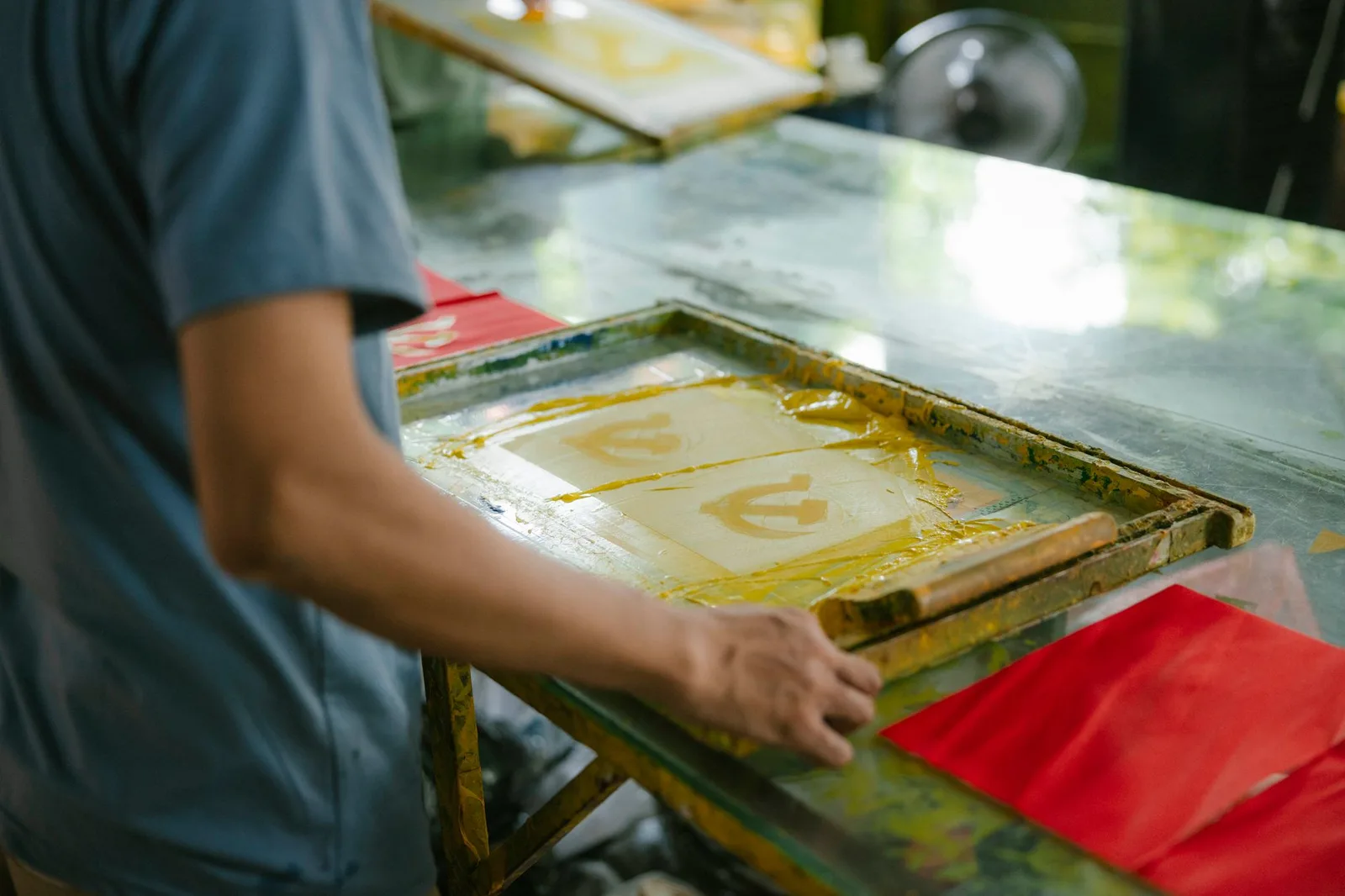
The oldest of the three and still the standard for volume. Ink is pushed through a mesh screen onto the fabric, one screen per color, then cured with heat.
What it feels like. Screen-printed ink sits on top of the fabric. On a design with heavy coverage you can feel a distinct film — slightly rubbery, noticeably different in texture from the surrounding cotton. Water-based and discharge inks soak in further and feel much softer, closer to the fabric itself.
Color. Each color needs its own screen, which is why screen-printed designs tend toward a limited palette with flat areas of color. Photographic images are possible through halftone techniques but are not what the process is naturally good at.
Durability. Properly cured plastisol is very durable. It is the method most likely to still look right after years of washing, provided the cure was done correctly. An undercured print is the main failure mode, and it shows up as cracking or fading much earlier than it should.
Cost. High setup, low marginal cost. Each screen has to be burned, the inks mixed, and the press registered before a single good shirt comes off. That work is the same for fifty shirts or five thousand, which is most of the economics of a short production run.
Direct-to-garment
DTG works essentially like an inkjet printer aimed at a shirt. Water-based ink is sprayed directly onto the fabric and bonds with the fibers.
What it feels like. Much flatter than screen printing. On a good DTG print on light fabric you can barely feel the graphic at all, because the ink is in the fibers rather than on top of them.
Color. This is where DTG wins outright. Full-color photographic artwork, gradients, and fine detail are all straightforward, because there is no per-color setup at all.
Durability. Generally lower than a good screen print. Because the ink bonds into surface fibers rather than forming a film, DTG prints tend to fade gradually rather than cracking. On dark garments a white underbase is required, which adds a layer that can affect both hand feel and longevity.
Cost. Almost no setup, higher per-unit cost. That makes it the sensible method for one-offs and very short runs, and the expensive choice at volume — the opposite profile to screen printing.
Fabric sensitivity. DTG works best on high-cotton fabrics. Ink bonds poorly to polyester without additional treatment, which is why DTG-heavy sellers tend to stock cotton blanks.
Embroidery
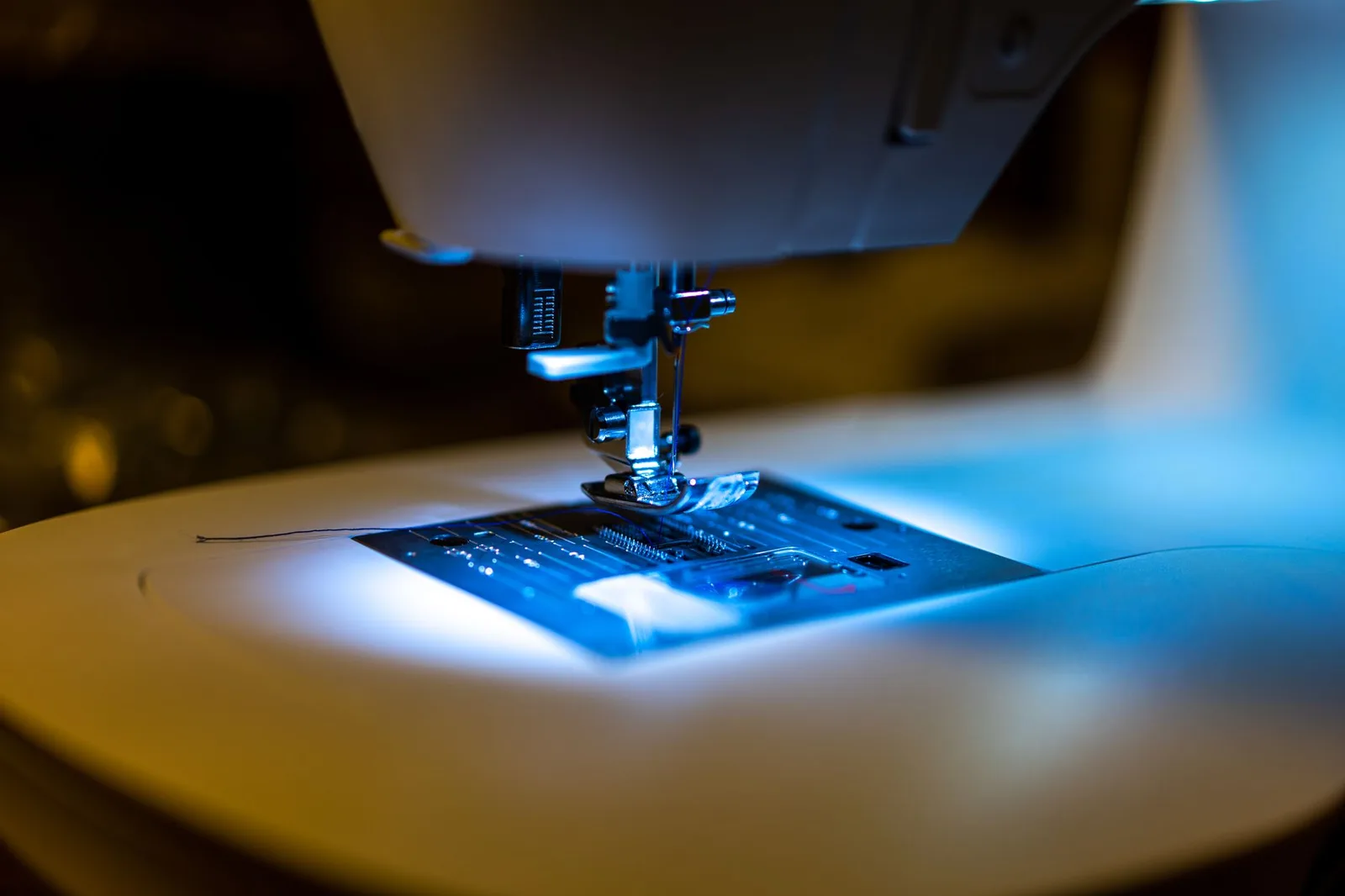
Not printing at all. Thread is stitched into the fabric by machine, following a digitized version of the artwork.
What it feels like. Substantial and textured, with a visible backing on the inside of the garment. It adds real weight and stiffness to the area it covers.
Color and detail. Limited. Each thread color is a separate operation, and fine detail simply cannot be resolved — there is a floor on how small a legible stitched letter can be. Embroidery is for logos, marks, and simple shapes, not illustrations.
Durability. The most durable of the three by a wide margin. Thread does not crack or fade the way ink does. Embroidery typically outlasts the garment it is on.
Cost. Setup is digitizing the artwork, which is a one-time cost per design. Then the per-unit cost scales with stitch count, so a large dense design is genuinely expensive at any volume.
Where it fails. On lightweight knits, embroidery can pucker the fabric around the stitching, because the thread is stable and the jersey around it is not. Stabilizer helps. A dense design on a thin tee is asking for trouble regardless.
Telling them apart
You can identify all three by hand in a few seconds:
- Run a finger over the graphic. Raised film with a distinct edge is screen printing. Barely detectable is DTG. Physically raised thread is embroidery.
- Look at the inside of the garment. Screen printing and DTG show little or nothing. Embroidery shows stitching and usually a backing material.
- Check the color count. Flat areas of a few colors suggests screen printing. Photographic detail or gradients means DTG.
- Stretch the graphic gently. Screen-printed film resists and may show fine surface texture. DTG stretches with the fabric.
Which one should you want
It depends entirely on the design and how you plan to use the garment.
For a bold graphic in a few colors that you intend to wear for years, screen printing is the right answer. For a detailed or photographic image, DTG is the only practical option. For a small logo on something that needs to survive heavy use, embroidery.
Where people get disappointed is expecting one method to deliver another's strengths — wanting photographic detail with screen-print durability, or embroidery-level longevity from a cheap DTG print on a synthetic blend.
Placement and size change the calculation
Where a graphic sits on the garment affects how long it survives, and it is rarely discussed.
The center chest is the most forgiving position. It sits over a relatively flat, stable area that does not flex much and takes little abrasion. A print across the shoulders or down a sleeve moves constantly and rubs against seat backs, bag straps, and coat sleeves.
Size matters for a related reason. A large solid area of plastisol ink forms a continuous film across a piece of fabric that is trying to stretch in every direction. The bigger the unbroken area, the more stress on that film, and the more likely it eventually cracks. Designs built from lines and separated shapes tolerate movement far better than a single large block of solid color.
This is one reason experienced printers push back on "just make it bigger." A design scaled up past what the fabric can support looks better on the mockup and worse after a year.
Hem prints and near-seam prints are their own problem. Ink that crosses a seam sits on an uneven surface and will crack along the ridge. Good placement keeps a graphic clear of seams and hems entirely.
What actually determines whether a print lasts
The method matters less than execution. A well-cured screen print outlives a badly executed one by years, and the same is true of DTG.
Things that matter more than the method:
- Cure quality. Ink that was not brought to full temperature will fail early, and there is no way to tell by looking at a new shirt.
- Fabric compatibility. Ink bonded to the wrong fiber content will not hold.
- The garment underneath. A print outlasting the shirt is a common outcome, and the shirt's construction is what decides that.
- How it is washed. Inside out, cold, and away from the dryer, which is worth doing properly.
From a retailer's perspective, the questions worth asking a supplier are about cure temperature and ink system, not about which method they use. Any of the three done well beats any of the three done badly.
Our graphic tees are screen printed, which is a decision driven by the artwork more than anything: flat, limited-palette designs are what screen printing is genuinely best at, and the durability is a useful side effect.