

The label is the most authoritative-looking thing on a garment and one of the least informative. It is a legal document, not a quality statement. Everything on it is there because a regulation requires it.
That does not make it useless. It makes it a starting point that needs to be combined with about ninety seconds of physical inspection.
What the label is actually telling you
Fiber content is the genuinely useful part. Percentages are regulated and reasonably reliable, and fiber content predicts a lot about how a garment will behave.
- 100% cotton. Breathable, absorbent, wrinkles, softens with wear, shrinks with heat.
- Cotton/polyester blends. More wrinkle resistance and dimensional stability, less breathability. The higher the polyester, the more likely the fabric pills at friction points.
- Cotton/elastane (often 95/5). Stretch and recovery. The elastane degrades faster than the cotton, particularly with heat, so these garments have a shorter functional life.
- Viscose, rayon, modal, lyocell. Cellulose fibers with a fluid drape. Generally weaker when wet, so they need gentler handling.
- Wool. Insulates when damp, resists odor, and requires attention to washing.
- Triacetate, acrylic, and similar. Usually chosen for cost or a specific hand feel rather than performance.
Country of origin tells you where final assembly happened and very little else. Excellent and poor garments are made in essentially every apparel-producing country. Using it as a quality proxy is a mistake.
Care instructions are typically conservative — the manufacturer is protecting against complaints, so instructions often specify gentler treatment than strictly necessary. Erring toward the conservative side is nonetheless a good habit, since almost nothing is damaged by being treated too gently.
What the label does not tell you
Everything that actually determines whether the garment lasts:
- Yarn quality and how it was spun
- Knit or weave density
- Seam construction and stitch density
- Whether the fabric was pre-shrunk, and how well
- Dye quality and colorfastness
- Whether panels were cut on-grain
None of that is disclosed anywhere. All of it is assessable by hand.
The ninety-second inspection
This is the routine I would use picking up an unfamiliar garment, in rough order of how much each check tells you.
1. Look at the shoulder seam on a knit. Is there a strip of tape running across the shoulders on the inside? That reinforcement is what stops a neckline from going slack permanently. Its absence is the single most reliable predictor that a T-shirt will look tired within a year.
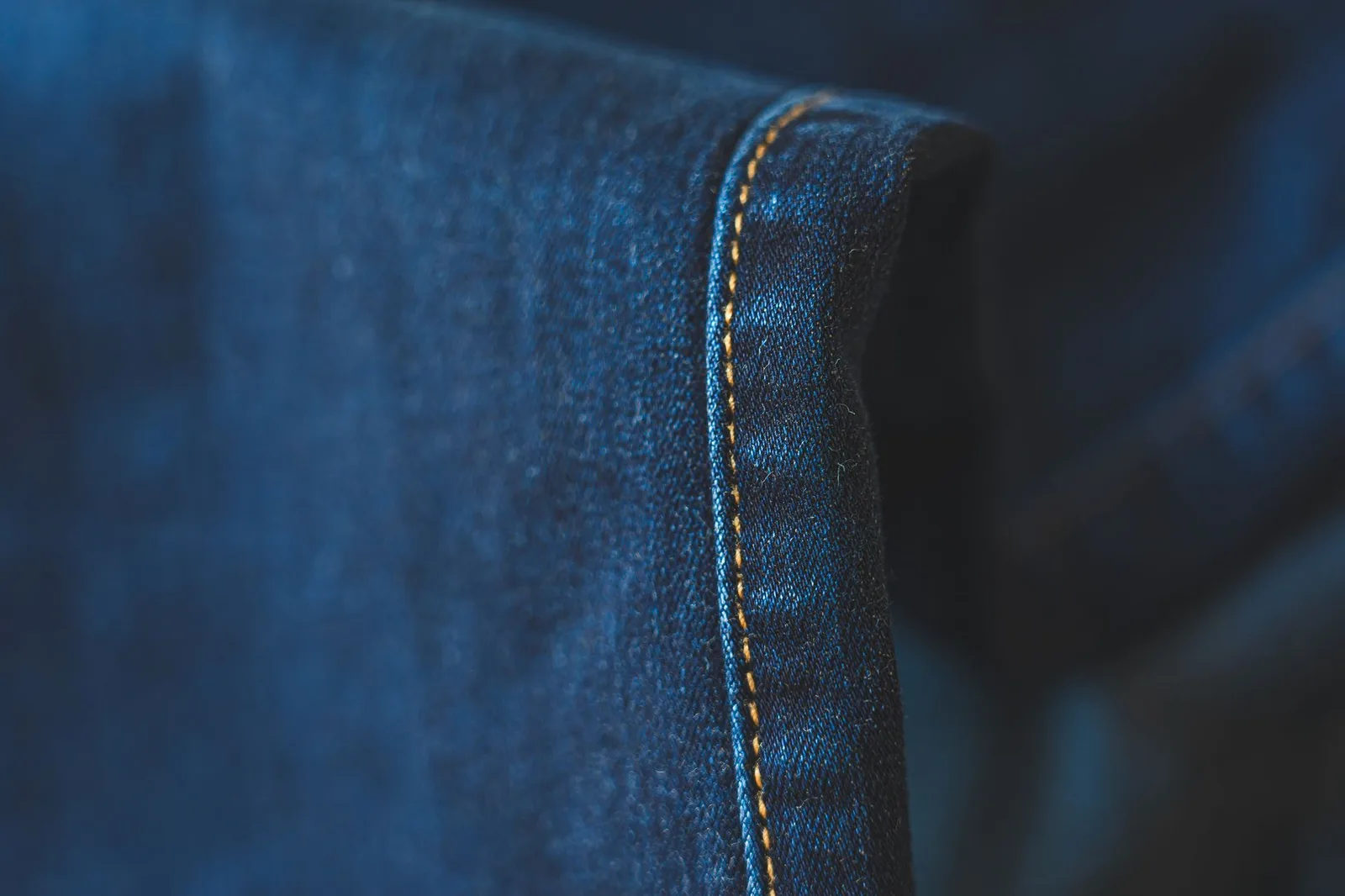
2. Check the hem and cuffs. Two parallel rows of stitching means double-needle construction. One row means somebody saved a few cents. This is the cheapest possible quality signal and it correlates well with the decisions made elsewhere.
3. Stretch the collar and let go. It should return. If it stays stretched in the shop, it will stay stretched forever.
4. Hold the fabric up to light. Even, consistent structure is what you want. Visible thin patches mean uneven knitting.
5. Check the side seams. Sideseamed garments are cut and sewn to a shape. Tubular garments are knitted as a cylinder and tend to twist over time — you have seen shirts whose side seam has spiraled around toward the front after a few washes. Tubular is cheaper. Look at the bottom hem to tell them apart.
6. Pull gently across a seam. You are looking for whether the stitching holds without gaping. Some give is normal in a knit; visible thread gaps under light pressure are not.
7. Check pattern matching, if there is a pattern. Stripes or checks that line up across a seam mean someone spent fabric to get it right.
8. Look at the buttons and hardware, if any. Cross-stitched buttons with a shank hold better than flat four-hole sewing. Zippers are worth running up and down once.
The care symbols, briefly
The pictograms are more informative than the text and almost nobody reads them.
- A tub is washing. The number inside is the maximum temperature in Celsius; dots mean the same thing on a coarser scale. A hand in the tub means hand wash. A crossed-out tub means do not wash at all.
- A square is drying. A circle inside means tumble drying is acceptable, and the dots indicate heat level — one dot is low. A crossed-out square with a circle means no tumble drying. Horizontal lines inside the square mean dry flat, which matters for knits and for the rayon family.
- A triangle is bleaching. Crossed out means none. Diagonal lines mean oxygen bleach only, not chlorine.
- An iron with dots for temperature. Crossed out means the fiber will melt or the finish will be damaged.
- A circle is professional cleaning, with letters indicating the solvent. This is instruction for a dry cleaner rather than for you.
The most useful of these is the drying symbol, because tumble drying causes more damage than anything else in the process. A flat-dry symbol on a knit is worth obeying.
Marketing language on the label
A few terms that carry less weight than they appear to.
"Premium." Unregulated. Means nothing.
"Ring-spun." Actually meaningful. The yarn has been spun in a way that produces a smoother, stronger thread than open-end spinning. Worth having.
"Combed cotton." Also meaningful. Short fibers have been removed before spinning, producing a smoother and more durable yarn.
"Pre-shrunk." Meaningful but not absolute. The fabric has been through a controlled shrinking process. It will still move somewhat, especially with heat.
"Garment-dyed." The finished garment was dyed rather than the fabric. Produces a softer hand and slight color variation. A stylistic choice rather than a quality one.
"Organic." Refers to how the cotton was farmed. It is a claim about agriculture, not about the durability or feel of the finished garment, and the two are independent.
Fiber names themselves are worth knowing properly, since what each fiber actually does predicts more about a garment than any adjective on the tag.
Weight, in context
Fabric weight is often the only number a product page gives, and it is genuinely informative about opacity and drape while telling you nothing about construction. A heavy shirt with a raw, untaped neckline will disappoint faster than a lighter one built properly, which is why weight is worth understanding as one input rather than a score.
Buying online, where you cannot touch anything
Most of these checks require the garment in hand, which is a real problem for online buying. What substitutes reasonably well:
- Read the product description for construction language. Sideseamed, taped shoulders, double-needle hems, ring-spun. A brand that mentions these is a brand that did them.
- Look at product photography for the inside of the garment. Some sellers show it. It is a good sign when they do.
- Use the flat measurements, not the size letter — the size guide numbers are the only fit information that transfers between brands.
- Read reviews for the words "after washing." Reviews written the day something arrived tell you about packaging. Reviews written two months later tell you about the garment.
We list weight, fiber content, and seam construction on every product page for exactly this reason. It is not generosity, it is the minimum required for someone to make an informed decision without holding the thing — and the difference in how a well-built piece ages is the whole argument for buying fewer of them.