

Most product pages list a GSM number somewhere below the fold, and most people scroll straight past it. That is a shame, because it is one of the only hard numbers you get about a garment before you own it. It is also one of the most misunderstood, mostly because it gets treated as a score rather than a measurement.
Here is the short version: GSM tells you how much fabric you are getting. It does not tell you how good that fabric is.
What the number actually measures
GSM stands for grams per square meter. Take a one-meter square of the fabric, weigh it, and the result in grams is the GSM. A 180gsm jersey means a square meter of it weighs 180 grams. That is the whole calculation.
Because it is a measure of mass over area, GSM bundles together several things that are worth separating in your head:
- Yarn thickness. Thicker yarn puts more material into the same area.
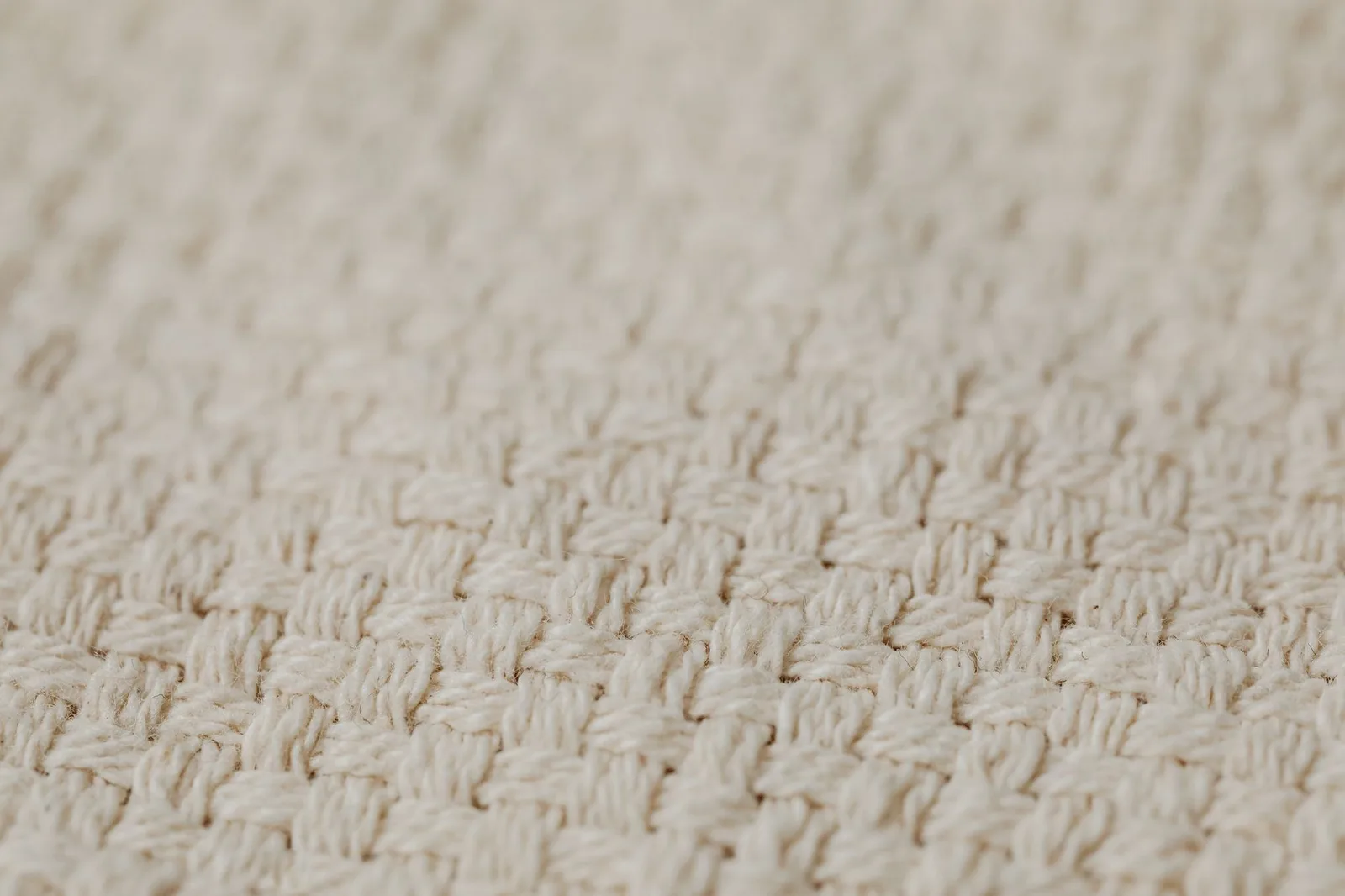
- Knit density. More stitches packed into the same space raises the weight.
- Fiber type. Cotton and polyester do not weigh the same at equal volume, so a blend can land at the same GSM as a cotton fabric while behaving completely differently.
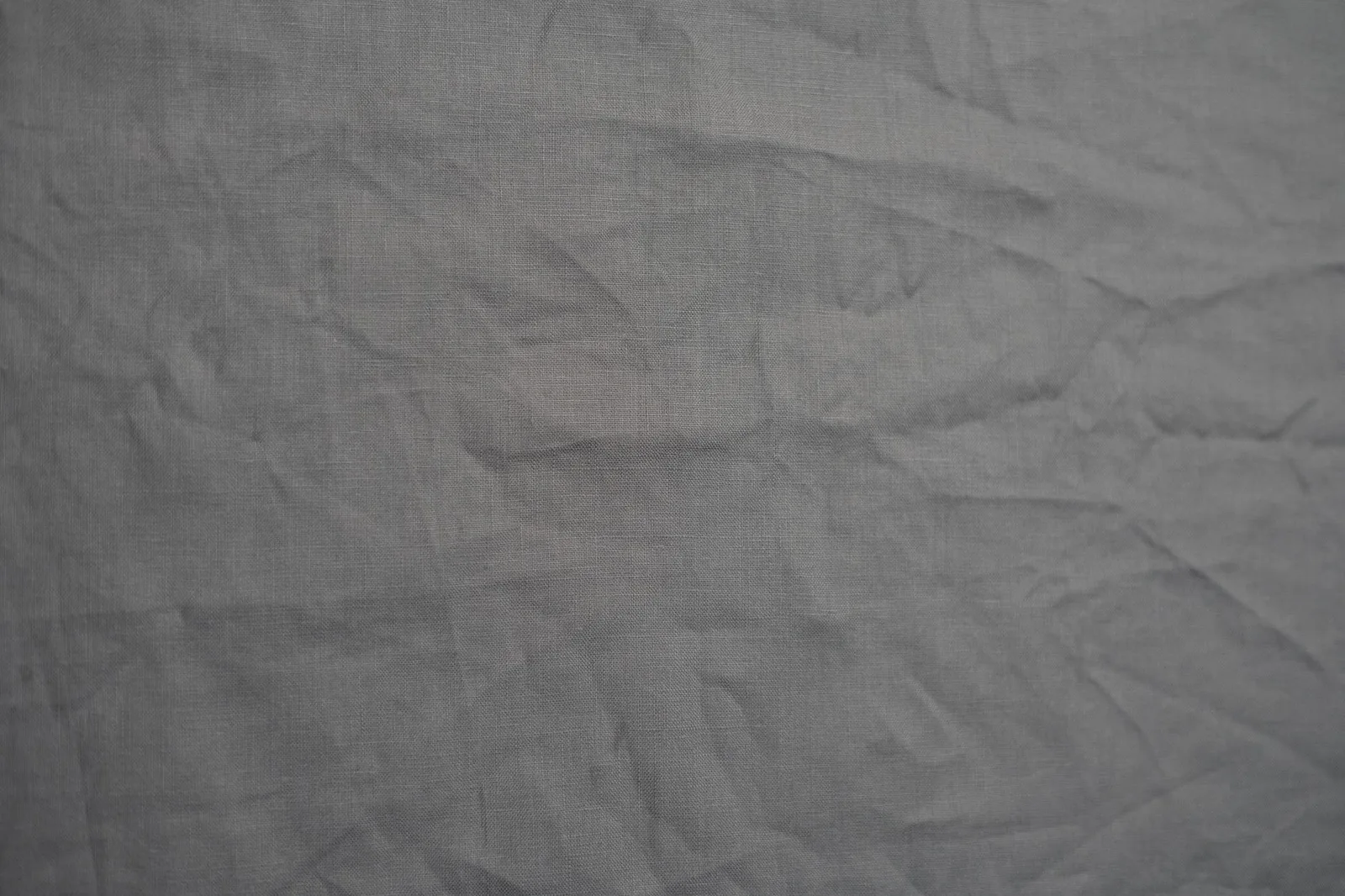
Two 200gsm fabrics can be built from entirely different combinations of those three variables and feel nothing alike. One might be a dense knit of fine yarn with a smooth, almost papery surface. The other might be a loose knit of thick, slubby yarn with visible texture. Same number, different garment.
Where the number is genuinely useful
Despite all that, GSM is not noise. It reliably predicts a handful of things.
Opacity. This is the most practical one. Lightweight cotton jersey below roughly 150gsm tends to be somewhat sheer, especially in white and especially when stretched across the shoulders and chest. If you have ever bought a white tee that looked fine folded and turned translucent the moment you put it on, weight was probably the culprit.
Drape versus structure. Lighter fabric follows the body. Heavier fabric holds its own shape and stands slightly away from you. Neither is better in the abstract, but they produce very different silhouettes from the identical pattern. A boxy cut in a light fabric reads as slouchy; the same cut in a heavy fabric reads as sculptural.
How it behaves after washing. Heavier fabrics generally hold their shape through more wash cycles, which is a real durability advantage, though construction matters at least as much here.
From a retailer's perspective, the weight spec is most valuable as a way to set expectations before a garment arrives. Someone expecting a substantial tee who receives a light summer one is disappointed even if the light one is well made.
The ranges worth knowing
These are working ranges rather than industry-standard definitions, and different mills draw the lines in different places.
Cotton jersey, for tees:
- 120–150gsm: summer weight. Light, breathable, often somewhat sheer.
- 150–180gsm: the standard weight for most mass-market T-shirts.
- 180–220gsm: midweight. Noticeably more substantial, holds a shape.
- 220gsm and up: heavyweight. Structured, opaque, slower to dry.
Fleece, for hoodies and sweatshirts:
- 250–280gsm: light fleece, closer to a heavy long-sleeve than a sweatshirt.
- 280–350gsm: the standard sweatshirt range.
- 350gsm and up: heavyweight fleece. Warm, dense, substantial.
If you want to calibrate against something you already own, weigh a garment you like on a kitchen scale and compare it to garments in the same category. The absolute number matters less than learning where your own preference sits.
Where heavier stops helping
This is the part that gets lost when GSM is treated as a quality ranking.
Heat. A 240gsm tee in humid August weather is uncomfortable. Cotton holds moisture, and more cotton holds more of it. Weight that reads as luxurious in October reads as a mistake in July.
Drying time. Heavyweight cotton takes substantially longer to dry, which matters if you line-dry or do laundry on a tight cycle.
Break-in period. Heavy fabric often starts stiff. It softens with washing, but the first few wears can feel like wearing cardboard, and not everyone is willing to wait it out.
Cost without benefit. More fabric means more material cost, which shows up in the price. If the garment's job is to be a light layer under a jacket, you are paying for weight you will not feel.
The other trap is assuming weight compensates for construction. It does not. A heavy tee with a single-stitched hem and a raw, unreinforced neckline will fail before a lighter one built properly. Weight is one input. Seam construction, neckline tape, yarn quality, and finishing all matter, and none of them show up in the GSM figure.
What to look at alongside the weight
When you are judging a garment, the weight is the opening question rather than the closing one.
- Fiber content. 100% cotton and high-cotton blends breathe and age differently than high-synthetic fabrics, which tend to pill along friction points.
- Neckline construction. Ribbed collars with taped shoulder seams keep their shape. Untaped ones stretch out and stay stretched.
- Hem and sleeve stitching. Double-needle stitching at the hem and cuffs is a low-cost detail that a manufacturer skips only to save money.
- Shoulder seam placement. Where the seam sits tells you more about how a shirt will look on you than almost any other single measurement, which is worth its own discussion of fit.
Our classic tees sit in the midweight range because that is the band where a shirt is opaque, keeps its shape, and is still wearable in warm weather. That is a judgment call about use, not a claim that heavier would be worse in every context.
Weight and printing interact
One thing shoppers rarely consider: fabric weight changes how a printed graphic looks and lasts.
Lighter, finer knits give a smoother surface, so fine detail and small text reproduce more cleanly. Heavier fabrics with thicker yarn have more visible surface texture, and very fine linework can break up slightly across it. Neither is a defect. It is the same reason the same photograph looks different printed on smooth stock versus textured paper.
Heavier fabric also moves less under the print. A graphic on a light, stretchy jersey flexes with the fabric every time you move, and over a long enough period that flexing is part of what cracks a print. More stable fabric puts less stress on the ink film.
This is one of the quieter arguments for midweight over lightweight on a graphic tee, and it connects directly to how the print itself was applied, which matters at least as much as what it was applied to.
Reading a spec sheet without being sold to
A useful habit: treat GSM the way you would treat the horsepower figure on a car. It is real, it is measurable, and it tells you almost nothing about whether you will enjoy driving it.
If a brand lists GSM alongside fiber content, knit type, and construction details, the number is part of an honest description. If GSM is the only spec offered and it is set in large type, it is being used as a marketing figure, and the number on its own does not support the weight it is being asked to carry.
If you are trying to work out which weight suits you, the practical route is to check the size guide for the measurements, then think about when you would actually reach for the garment. A tee you want for layering under a jacket in February and a tee you want on its own in July are different purchases, and the specification that separates them is right there on the page.