

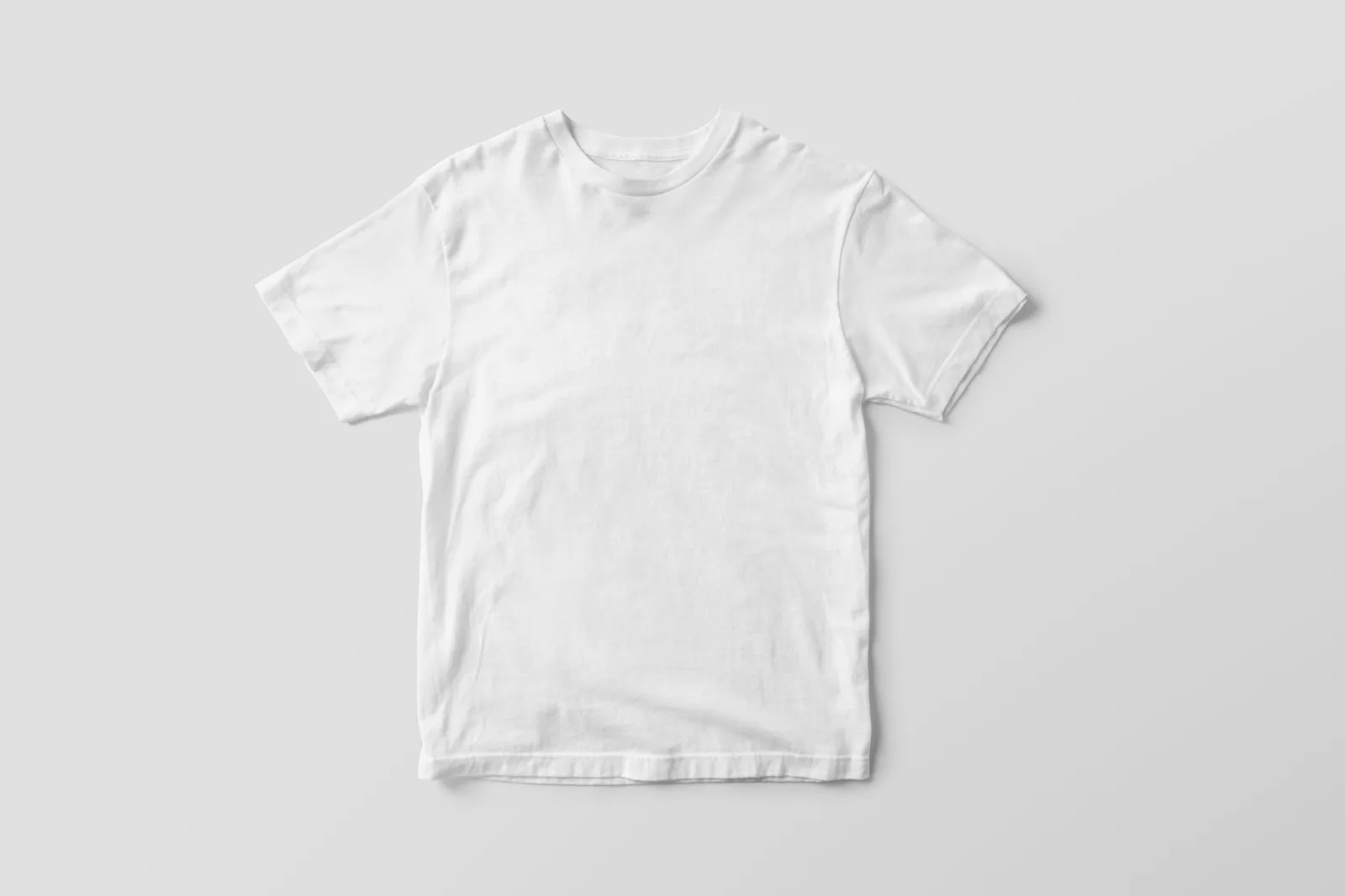
A print that cracks after a few months is annoying in a specific way, because the shirt itself is usually fine. The fabric is intact, the seams hold, and the thing that made you buy it has broken.
There are three separate causes, and they need different responses. Two are preventable by you and one is not.
What is physically happening
Most screen-printed graphics are a layer of cured ink sitting on the fabric surface. That layer is a solid film, and the fabric underneath is a knit that stretches in every direction.
Every time the shirt is stretched — pulling it on, moving in it, tumbling in a machine — the fabric extends and the ink film has to extend with it. A properly cured print has enough flexibility to do that thousands of times. A poorly cured one does not, and the film fractures. Once fractured, the cracks widen with every subsequent flex and eventually pieces lift away.
Direct-to-garment prints fail differently. The ink is bonded into the surface fibers rather than sitting on top, so instead of cracking it fades as those surface fibers abrade away, taking the color with them.
Cause one: it was undercured
This is a manufacturing fault and there is nothing you can do about it after the fact.
Plastisol ink has to reach a specific temperature throughout the film to cure properly. Too cool, or not long enough, and the film never reaches full strength. It looks completely normal when new. It fails within a few washes.
How to recognize it: cracking that appears very early — within the first handful of washes — and affects the whole print evenly rather than concentrating at fold points. Ink that comes away on your fingers when you rub it is a clear sign.
What to do: this is a defect, not wear, and it is worth raising with the seller. A print failing at six washes is not normal, and we would want to know about it through our returns process rather than have someone quietly conclude the shirt was cheap.
Cause two: heat
The dryer is the largest preventable factor.
Heat softens the ink film. A softened film in a tumbling drum, pressed against other garments and the drum wall, deforms and abrades. Repeat that weekly and the film degrades far faster than wearing the shirt ever would.
Ironing directly onto a print does the same thing much faster. The iron softens the ink and lifts or glosses it in a single pass.
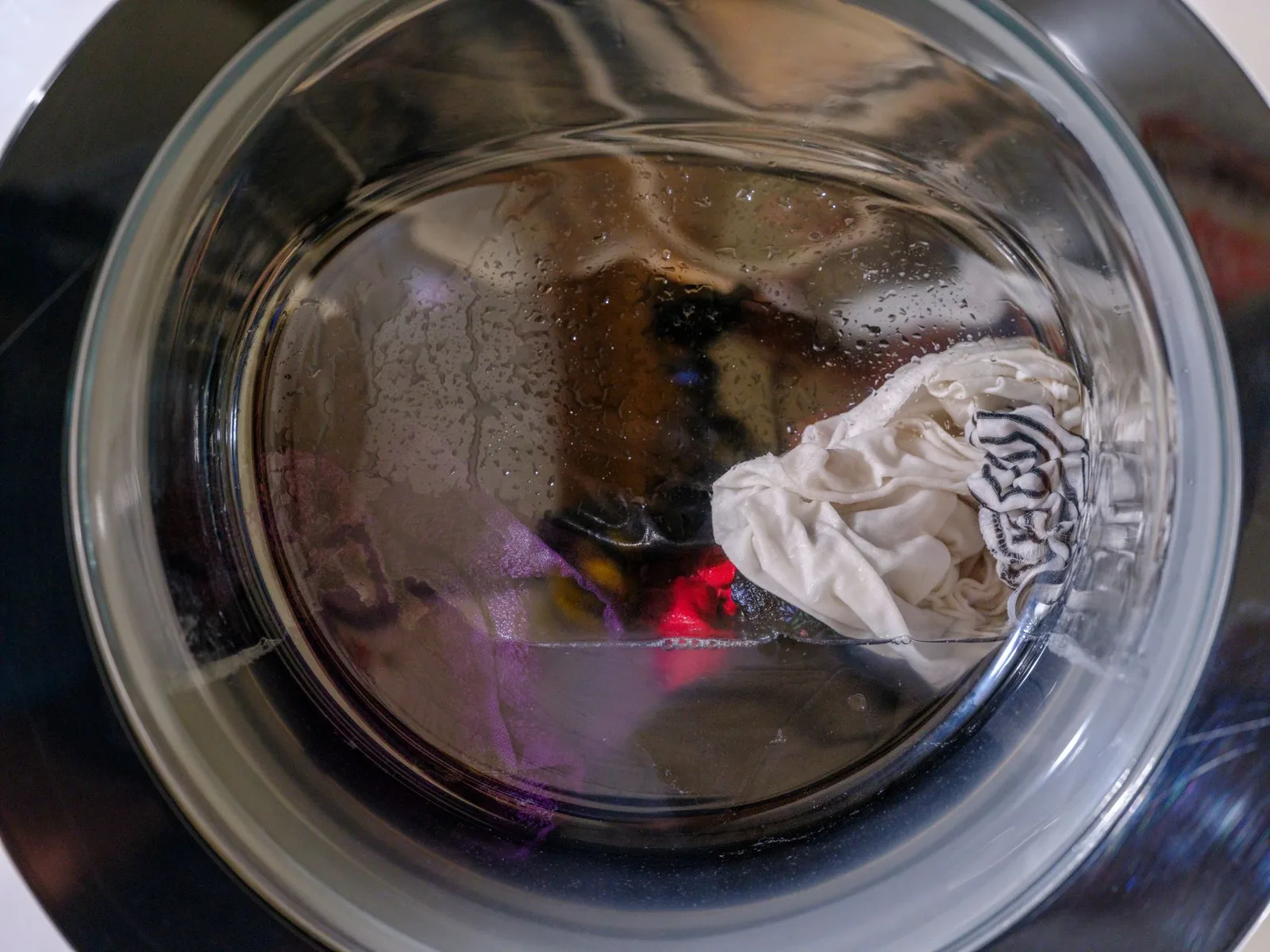
What to do instead:
- Air dry printed items. If you must tumble, use the lowest heat and remove them slightly damp.
- Never iron on the print. Turn the shirt inside out and press the reverse, or work around it.
- Keep printed items out of very hot water.
This is the same instruction that applies to cotton garments generally, and prints simply make the consequences visible sooner.
Cause three: abrasion
The other preventable factor, and the one people underestimate.
In a wash cycle, garments rub against each other continuously. A print rubbing against denim, a zipper, or a button for forty minutes takes real surface damage. Over months it dulls, then thins, then breaks.
Turn printed garments inside out. This is the single highest-value habit for print longevity. Inside out, the print rubs against the inside of its own shirt instead of against hardware.
Wash printed items with soft items. A load of tees is a different load from a load of jeans. Separating them is not fussiness; it is the difference between a print lasting two years and five.
Do not overload the machine. A packed drum increases contact pressure between garments, which increases abrasion. It also washes less effectively, so people compensate with more detergent and hotter water, which makes everything worse.
The fold problem
Cracking often shows up first along the lines where a shirt is folded in a drawer, because that spot gets a sharp, sustained bend in one place.
If you store printed tees folded, refold them along different lines occasionally, or hang them instead. Hanging has its own cost for knits — it stretches shoulders over time — so folding remains the better default for the garment as a whole. Just do not fold the same crease through the same print for two years.
Vinyl, transfers, and why they fail differently
Not everything on a shirt is screen print or DTG, and the other methods have their own failure modes worth recognizing.
Heat-transfer vinyl is a solid sheet of colored material cut to shape and heat-pressed onto the fabric. It has a distinctly smooth, slightly plasticky surface and a sharp edge you can feel all the way around. It does not crack so much as peel — the bond fails at an edge and the piece lifts. Once an edge lifts, it progresses quickly, and washing inside out matters more here than anywhere else.
Transfers and sublimation behave differently again. Sublimation dyes the fibers themselves, so it cannot crack or peel at all, but it only works on polyester and on light colors.
How to tell: vinyl has uniform thickness and geometric edges. Screen print has slight variation and softer edges. If the graphic looks like it was cut from a sheet, it was.
The practical difference is that a peeling vinyl graphic cannot really be saved, whereas a print with fine cracking often has years left in it.
What normal wear looks like
Not all change is failure, and some of it is desirable.
A screen print will gradually soften and lose a little opacity over years. Fine surface texture develops. Colors mellow slightly. This is a print aging, and on a well-made shirt it usually looks better than the day it arrived.
The distinction is between gradual softening across the whole graphic and discrete cracking with hard edges and lifting. The first is age. The second is damage.
Timeline is the other clue. A print showing wear after two or three years of regular use is behaving normally. One showing the same wear after two months is not.
What to look for when buying
Some of this is assessable before purchase.
- Feel the print. A very thick, stiff film cracks more readily than a thinner, more flexible one. Water-based and discharge inks feel softer and generally flex better.
- Check the print size. Large unbroken areas of solid ink flex more than designs made of separated shapes, so they fail sooner. This is one of several reasons print method and placement matter.
- Check where it sits. A graphic crossing a seam or hem sits on an uneven surface and cracks along the ridge.
- Consider the fabric. A stable midweight fabric moves less under the print than a thin stretchy one, which puts less stress on the film.
The routine, condensed
- Inside out, always.
- Cold water.
- Wash with soft items, not with hardware.
- Do not overload the drum.
- Air dry, or low heat and remove early.
- Never iron the print.
- Vary the fold if you store them folded.
That is it, and none of it takes extra time. Done consistently, a well-made print on a decent shirt will outlast several years of regular wear. Skipped, the same print can be visibly failing inside a year, and it will look like the shirt was the problem.