



For a long stretch, the pullover hoodie was the default and the zip-up was the lesser option — the thing you owned if you had not thought about it. That has been shifting, gradually and without much announcement.
The reasons are practical rather than aesthetic, which is usually a sign that a change will persist.
What a zip actually gives you
A pullover has one state: on. A zip-up has a continuum, and that turns out to matter more than it sounds.
It is adjustable. Fully zipped it is a warm layer. Half-zipped it vents. Open it is essentially a light jacket over whatever is underneath. One garment covering a range of temperatures rather than one point on the scale.
It comes off without a production. You can take a zip-up off while seated, without disturbing your hair, glasses, or a cap. Anyone who has removed a pullover on a warm train understands the appeal.
It layers as an outer or a mid piece. Open over a tee it is the outermost layer. Zipped under a jacket it is insulation. A pullover is much less flexible in this role because it has to go over your head with a jacket already involved.
It shows what is underneath. An open zip-up frames the garment beneath it, which adds a vertical line and lets a graphic tee be visible without being the whole outfit.
Why now
The garment has not changed. How people spend their days has.
Fewer rigid dress codes, more movement between environments with different temperatures, more days that involve both a cold commute and an overheated interior. Adjustability is worth more under those conditions than it was when people put on a coat, went to one place, and stayed there.
This is the kind of change worth separating from a cycle. It tracks a shift in how clothing gets used rather than a swing in silhouette, which is the distinction that predicts whether something reverts. Trouser width will swing back. The usefulness of a garment you can open will not.
It is also worth noting that the zip-up never actually went anywhere. It stayed in continuous production and continuous wear the entire time. What changed is where it sits in the hierarchy — from default-by-inattention to a considered choice.
The thermal tradeoff
Being straightforward about the cost: a zip-up is less warm than a pullover in the same fabric.
The zipper creates a vertical line down the front where there is no fleece, no loft, and no trapped air. Depending on the zipper, a small amount of air moves through the teeth as well. Better versions use a storm placket — a fabric flap behind the zipper — specifically to close that gap.
For most people in most conditions, the adjustability is worth more than the small thermal penalty. If the garment's only job is maximum warmth in a narrow band, a pullover does that better, and the mechanics of why are worth understanding.
What to check when buying one
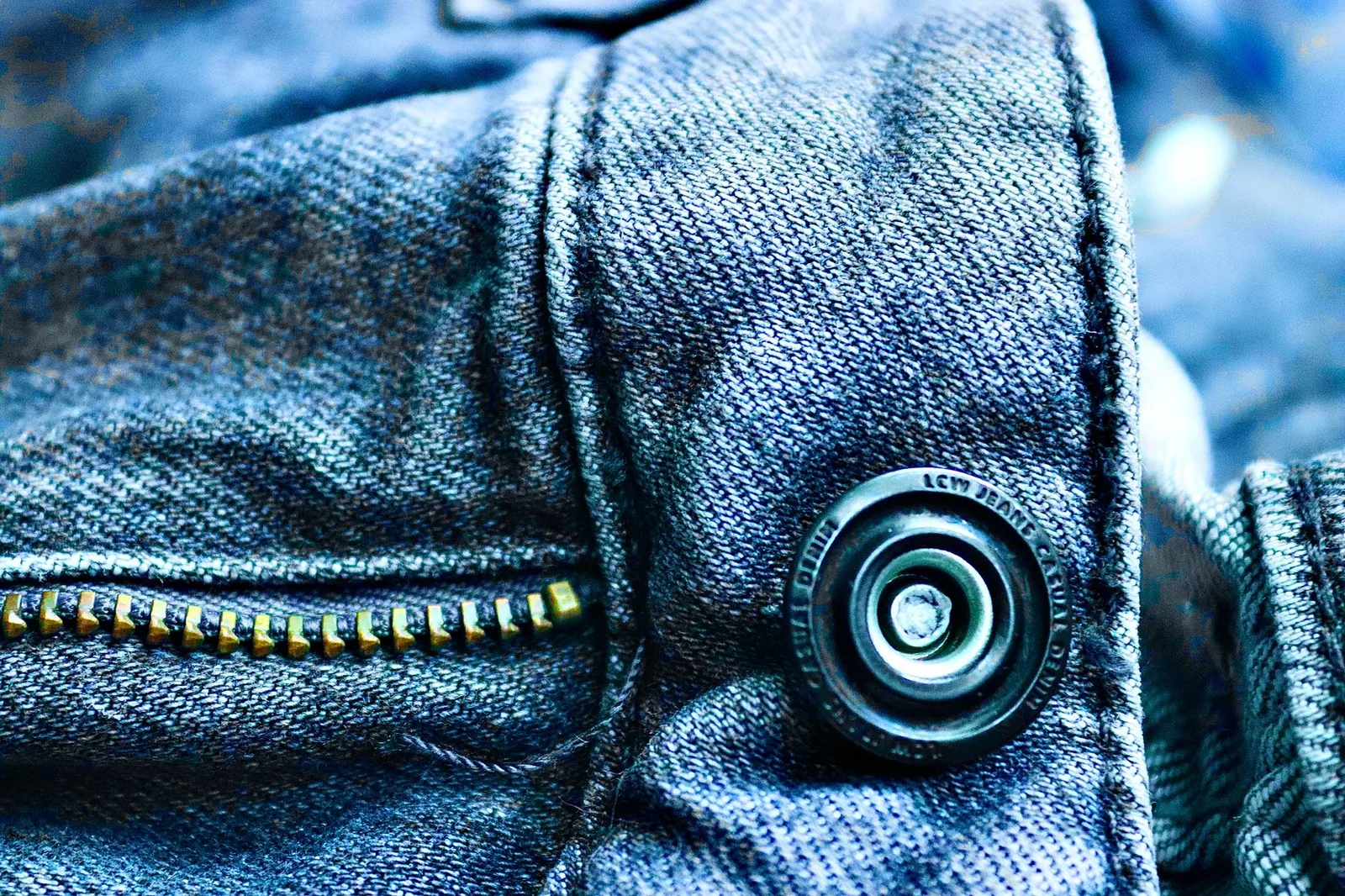
The zipper is the part that fails, so it is the part to examine.
Zipper quality. Run it fully up and down several times. It should move smoothly with no catching. A zipper that snags in a shop will snag worse in a year. Metal zippers are generally more durable than plastic coil, though a good coil zipper outlasts a cheap metal one.
How the zipper is attached. The tape should be stitched securely along its whole length with no puckering. Puckering means the tape and the fabric were fed at different tensions, and it gets worse with washing.
The bottom stop. This is where a zipper takes the most stress, since it is where you apply force to start it. Look for reinforcement — a bar tack or extra stitching.
A storm placket, if warmth matters to you.
Chin guard. A small fabric tab at the top of the zipper. Its absence is a design oversight you will notice every cold day.
How it hangs open. This is the one people forget to check, and it is how the garment will spend most of its life. Some zip-ups look correct closed and shapeless open, because the front panels were drafted only for the closed state.
Fit runs differently
A zip-up needs slightly more room through the chest than a pullover, because the front opening removes some of the ease a closed front provides. A zip-up that fits closely will pull at the zipper and show horizontal stress lines across the front.
It also needs to accommodate whatever it is worn over, since it is more often a mid or outer layer. Sizing it over a tee when you intend to wear it over a shirt is the usual error — and the same reasoning applies to sizing anything you plan to layer.
The adjacent garments
The zip-up sits in a family worth distinguishing, because they get conflated.
Zip hoodie. Hooded, fleece-lined, casual. The subject here.
Track jacket. Typically no hood, smoother synthetic fabric, ribbed collar, often with contrast detailing. Lighter and less warm, with a sportier register.
Coach jacket. Woven rather than knit, snap or zip front, unlined or lightly lined. A wind layer rather than insulation.
Zip-through knit. A sweater with a zip. Smarter than a hoodie and works in settings a hooded sweatshirt does not.
They occupy overlapping space, and which one is right depends mostly on how formal the setting is and whether you need warmth or wind resistance.
How to wear it open
Most of a zip-up's life is spent unzipped, and the open state is where it either works or looks like an afterthought.
Length matters more open than closed. Open, the two front panels hang as vertical lines beside the body. If the hoodie is longer than what is underneath, those panels extend past the hem of the tee and the outfit reads unresolved. Slightly shorter than, or level with, the layer underneath is what you want.
What is underneath becomes part of the outfit. An open zip-up frames a vertical strip of whatever is beneath it, which is why a plain tee works well and a busy graphic can look cropped. If the tee has a central print, check that the opening is not cutting it in half.
Sleeves. Pushing the sleeves up shortens the garment visually and stops the open panels from dominating. It also solves the common problem of a zip-up whose sleeves are slightly too long.
The hood. An open zip-up's hood sits flatter against the back than a pullover's, which some people prefer and others find looks collapsed. A double-layer hood holds its shape better here.
Where it fits in a wardrobe
The zip-up's argument is versatility rather than excellence at any one thing. It is not the warmest layer, not the smartest, and not the lightest. It is the one that covers the most days.
For a small wardrobe, that is a strong case — a garment usable across a wide temperature range earns its space more easily than one that is ideal for six weeks. That reasoning is the same one behind building around a small number of pieces that each do several jobs.
If you already own a pullover and are deciding what to add, the zip-up is the more useful second piece, precisely because it does something the first one cannot.