


Most capsule wardrobe advice starts from the wrong end. It opens with a number — thirty pieces, thirty-three, whatever the framework is — and then works backward to fill the slots. You end up owning a checklist rather than a wardrobe, including several things you bought because a category was empty.
Try the reverse. Start with one garment you already wear constantly, and build only what that garment needs around it.
A hoodie is a good anchor for this. It sits in the middle of the formality range, it works alone or as a layer, and it is forgiving about what it is paired with. Five pieces around one hoodie will cover most casual weeks.
Why one anchor beats a category list
The problem with building by category is that it produces items with no relationship to each other. You own a jacket, some trousers, and a few tops, and about a third of the possible combinations actually work. The rest sit in the closet.
Building around an anchor inverts that. Every piece you add has to answer a question: does this work with the thing I already wear four days a week? If it does not, it does not go in.
The result is a smaller wardrobe with a higher hit rate. Not every outfit will be interesting, but very few will be unwearable.
The five pieces
1. The hoodie itself. Pick one in a color that is not fighting anything: black, charcoal, oatmeal, navy. Save the interesting color for a piece you own more than one of. This is the garment doing the most work, so it should be the least opinionated.
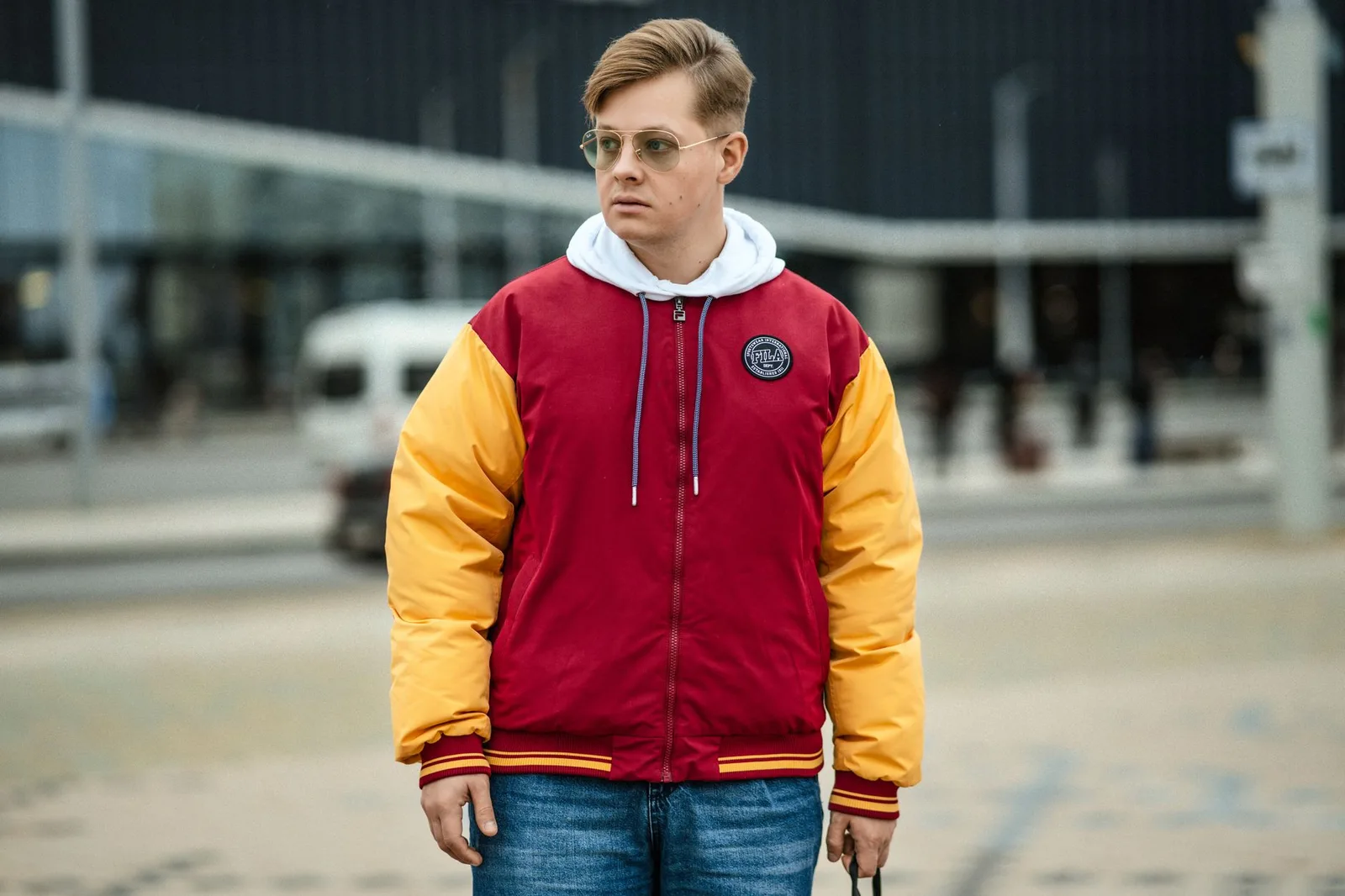
Fit matters more than the color does. A hoodie that fits close reads as sportswear. One cut with room through the body and a slightly dropped shoulder reads as streetwear. Both are fine, but they build toward different wardrobes, so decide which you are doing before you buy the other four pieces.
2. A straight or slightly tapered trouser. Not skinny, not enormous. This is the piece that lets the hoodie be the visually heavy element. If both halves of an outfit are voluminous, the whole thing reads as shapeless rather than intentional.
Dark, solid, no visible branding. Canvas, twill, or a heavy cotton all work.
3. A T-shirt that fits under it cleanly. Specifically, one whose collar sits lower than the hoodie's neckline and whose hem is not longer than the hoodie's. This sounds fussy and is not — a tee that peeks out at the hem in an uncontrolled way is the difference between layered and disheveled.
A classic midweight tee is the reliable version of this. Enough body that it does not cling, short enough that it stays hidden unless you want it visible.
4. A jacket that fits over it. This is where people get caught. A hoodie has bulk, particularly through the shoulders and the hood itself, and a jacket sized for a shirt will not close over one. Size the jacket while wearing the hoodie, or accept that you own two separate outfits rather than one layered one.
A chore coat, a coach jacket, or an unlined overshirt all sit well over a hoodie without adding much visual weight.
5. One pair of shoes that does not argue. A low-profile sneaker in a neutral color. The shoe's job in this wardrobe is to not be the thing anyone notices, which is a real job.
The proportion rule that holds it together
There is one principle underneath all of this: one volume at a time.
If the top is oversized, the bottom should be closer to the body. If the trousers are wide, the top should be more fitted, or at least shorter. When both are large, you lose the outline of the person wearing them, and the outfit stops reading as a choice.
This is why the five pieces above specify a straight trouser rather than a wide one. The hoodie is the volume. Everything else is supporting it.
The same logic scales up if you add pieces later. Adding a wide-leg trouser is fine, but it wants a more fitted top, which means a sixth piece, not a rearrangement of the five.
What five pieces actually gets you
Run the combinations:
- Hoodie and trousers.
- Tee and trousers.
- Tee under hoodie, with trousers.
- Any of the above under the jacket.
That is a working week of outfits from five garments, plus a jacket that extends all of them into colder weather. It is not a large wardrobe, and it is not supposed to be. It is a floor you can build on rather than a ceiling.
Keep the palette narrow on purpose
Five pieces only produce a working wardrobe if they all go together, and the fastest way to guarantee that is to limit the palette before you buy anything.
A workable approach: pick two neutrals and one accent. Black and oatmeal with olive. Charcoal and cream with rust. Navy and grey with almost anything. The two neutrals carry the trousers, the jacket, and the base layers. The accent shows up once, usually on the hoodie or the tee, so it changes the look without needing a matching partner.
The reason this works is that neutrals coordinate with each other by default, so every combination is automatically safe. You are not tracking which pieces clash, because none of them do.
The mistake is buying five interesting pieces. Each one is appealing alone, and collectively they only combine one way, which defeats the purpose. If you find yourself justifying a purchase by saying it goes with one specific other item, it is probably the wrong purchase for a wardrobe this small. There is more on building a workable palette in our guide for people who default to black.
Where to spend and where not to
If the budget is uneven, put it into the hoodie and the trousers. Those two are worn most often, take the most abrasion, and are the most visible when they start to look tired. A hoodie that pills across the chest after two months is obvious from across a room.
The T-shirt matters less than people assume when it is being worn as a layer, because most of it is hidden. Spend there when the tee is the whole outfit, not when it is the base of one.
Shoes are their own calculation and depend heavily on how much you walk, which is a longer conversation about rotation.
Expanding without wrecking it
When you do add pieces, add them one at a time and give each one a month. The temptation after building a capsule is to immediately double it, which puts you back where you started.
Useful sixth and seventh pieces, roughly in order:
- A second tee in a contrasting neutral, so the visible-layer version of the outfit changes.
- A knit that layers under the jacket in place of the hoodie, for when a hood is wrong for the setting.
- A bag or cap, which changes an outfit's read more than most people expect for the money.
One thing that does not help: a second hoodie in a similar color and weight. It feels like a safe purchase and it adds nothing, because it does the same job as a garment you already own.
If you are working out which pieces to start with, the full catalog is a reasonable place to see what fits together, and the size guide has the flat measurements — which matter more than the label size when you are trying to get a tee to sit correctly under a hoodie.