

Most people either own two pairs of shoes and wear one of them into the ground, or own fifteen and wear three. Neither is a rotation.
A rotation is a small number of pairs, each with a job, worn in alternation. Three covers nearly everything, and the alternation is not an aesthetic preference — it materially extends how long each pair lasts.
Why rotating matters mechanically
A shoe worn all day absorbs a significant amount of moisture from your foot. That moisture ends up in the lining, the insole, and the midsole foam.
Wearing the same pair the next day means it starts damp. Persistent moisture degrades adhesives, accelerates the breakdown of foam, encourages odor-causing bacteria, and softens leather so it creases more deeply and permanently.
Giving a pair a day off to dry out fully addresses all of that at once. Two pairs alternated will each outlast one pair worn continuously, and the difference is not marginal.
This is the same logic as not wearing a shirt two days running, except that shoes hold far more moisture and are much more expensive to replace.
The three pairs
1. The everyday neutral.
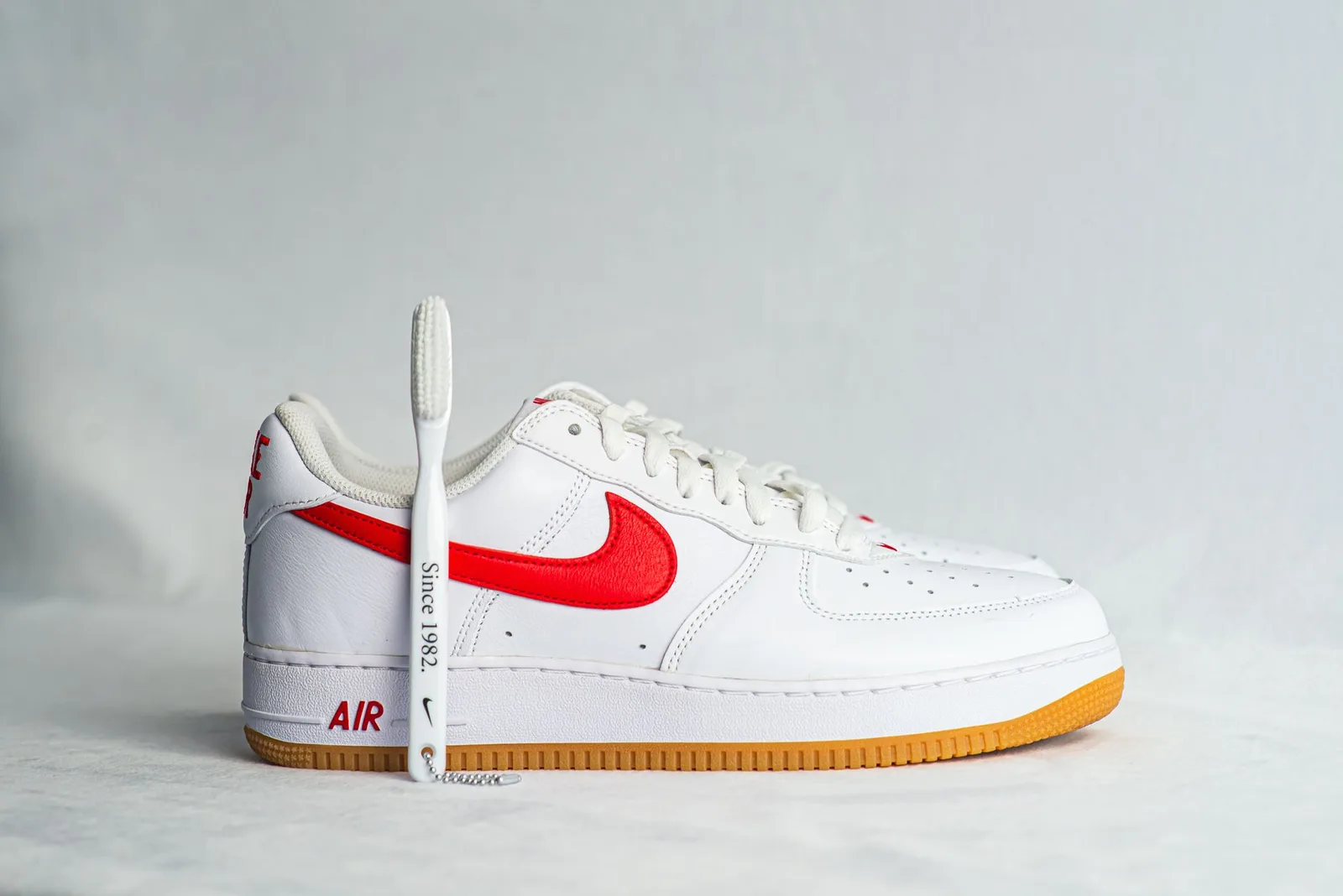
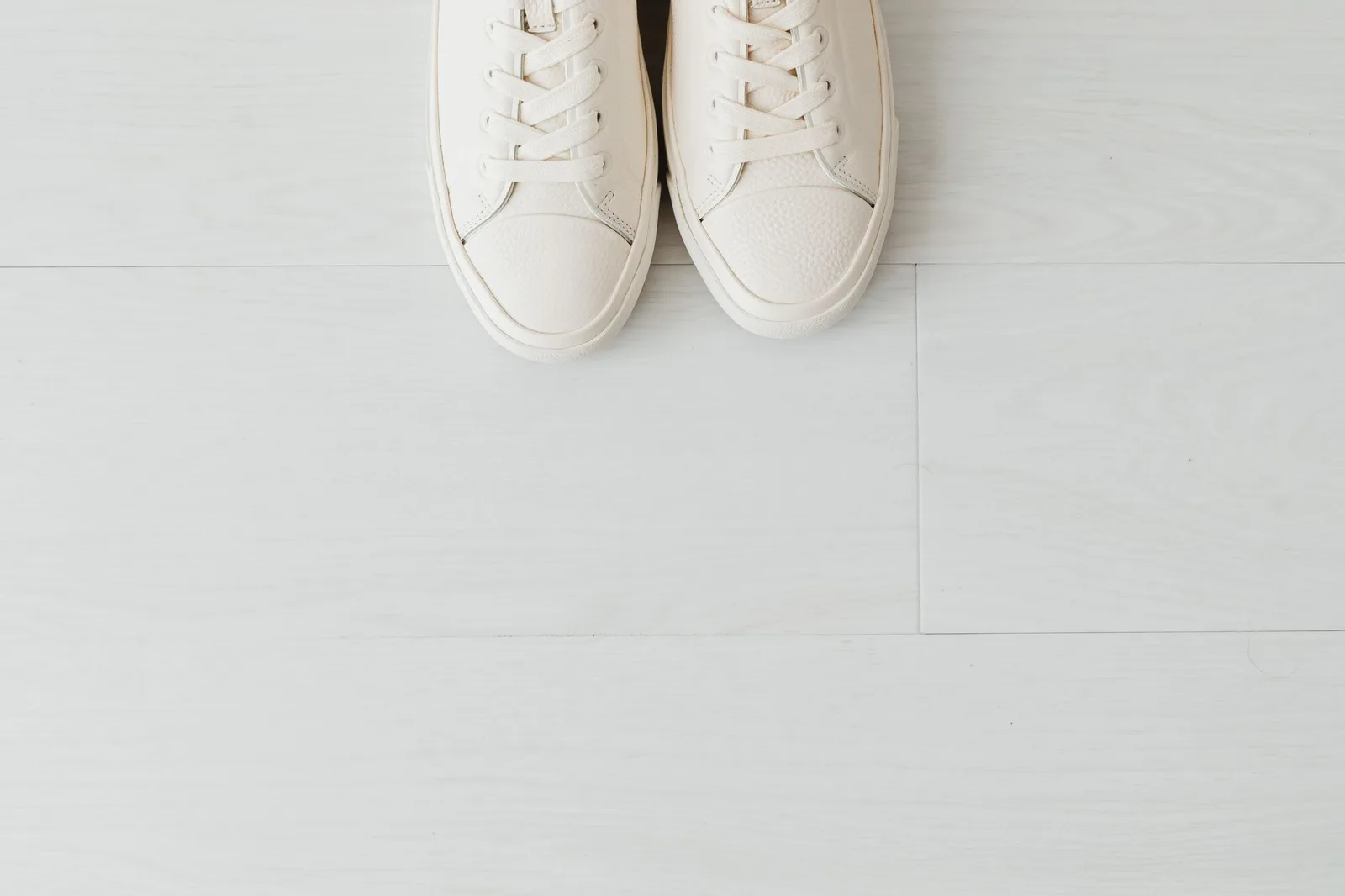
A low-profile sneaker in white, off-white, black, or grey. Minimal branding, clean lines, leather or a good synthetic.
This is the pair that goes with the most outfits and gets worn the most. Its job is to be unobtrusive — it should let the rest of the outfit be the point.
Because it takes the most wear, it should be the most durable and the easiest to clean. Leather is generally the better choice here over canvas, since it can be wiped down and holds up longer.
2. The one that dresses up.
A slightly sleeker silhouette, usually leather, in a darker color. Lower profile, cleaner lines, less visible cushioning.
This is what you wear when a sneaker needs to work in a setting where a sneaker is borderline — a dinner, an office with a loose dress code, an event where you want to look considered without wearing dress shoes.
The distinguishing features are a narrower profile, a thin sole, and no technical detailing. A chunky runner cannot do this job no matter how expensive it is.
3. The one you do not care about.
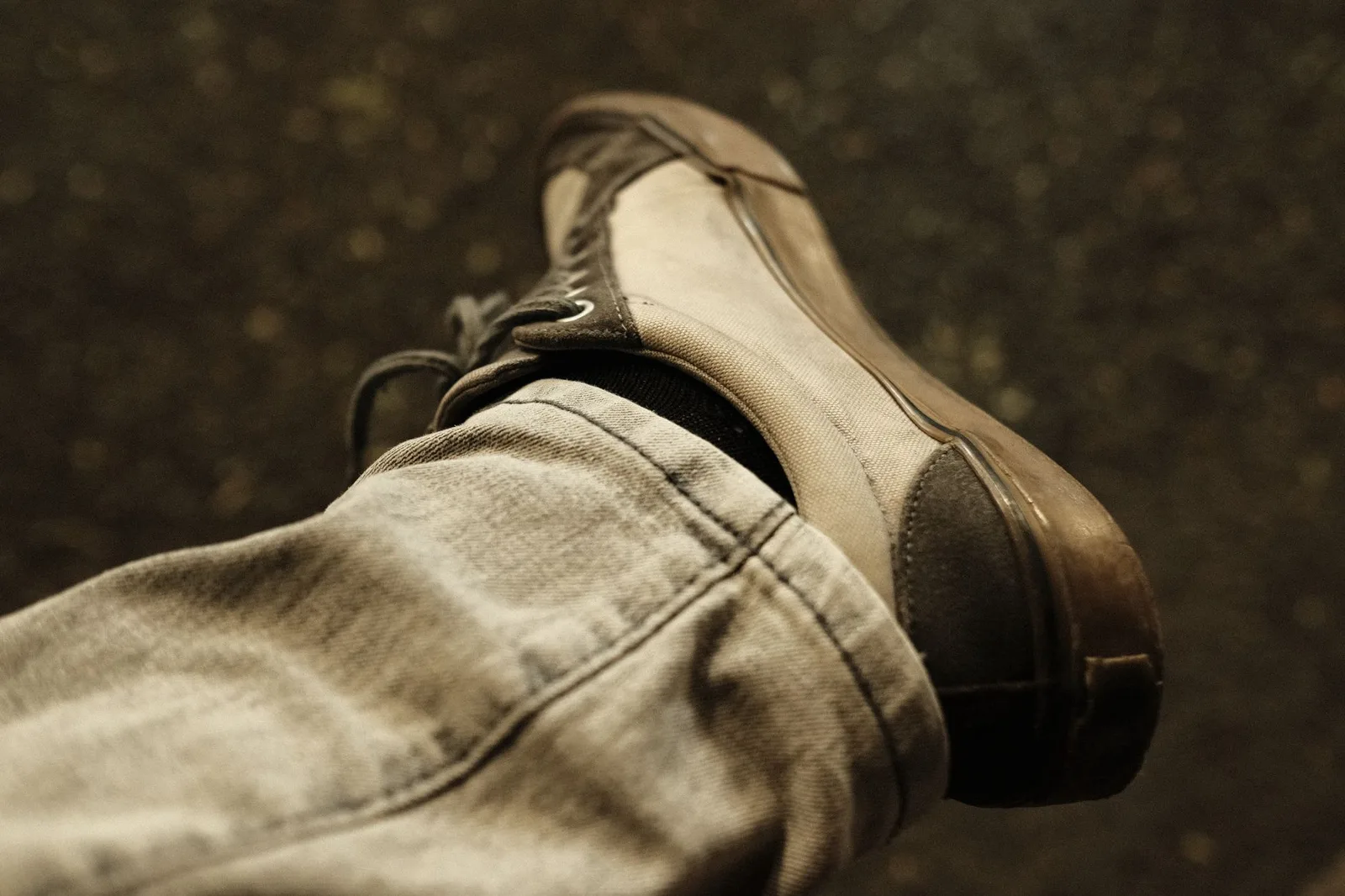
Something rugged, dark, and already scuffed. Suede or heavy canvas, a lugged sole, in a color that hides dirt.
This is for bad weather, long walking days, and anything where the shoe is going to take damage. Its entire function is to protect the other two pairs from situations that would ruin them.
People skip this one and then wear their good white sneakers in the rain, which is how a good pair becomes a bad pair in one afternoon.
Where the money goes
If the budget is uneven, put it into the everyday pair. It gets the most wear, so cost per wear is lowest and quality is most visible.
The dress-up pair is worn least often and can be cheaper, with one caveat: cheap leather looks cheap in exactly the settings where you would wear this pair. If you are economizing, economize on the rugged pair instead, where scuffs are the point.
The rugged pair should be genuinely inexpensive. It is going to be destroyed. That is its job.
What to look at when buying
The construction details that predict whether a sneaker lasts:
Sole attachment. Cemented (glued) is the norm and is fine when done well. Look at the join between the upper and the sole for a clean, even line with no gaps. Sole separation is the most common way sneakers die.
Upper material. Full-grain leather ages best and can be conditioned. Corrected-grain leather has a coating that eventually cracks. Suede is comfortable and vulnerable to water. Canvas is cheap and breathable and wears through. Synthetic varies enormously.
Midsole. EVA foam is light and compresses over time, gradually losing cushioning. Polyurethane is heavier and lasts longer. Rubber outsoles wear slowly. For a shoe worn daily, midsole compression is usually what ends it rather than the upper failing.
Lining. A fully lined shoe is more comfortable and lasts longer than an unlined one, and it is not always obvious. Look inside. As with clothing, the construction details that decide longevity are the ones nobody puts on the label.
Stitching. Visible stitching around the toe and heel is a good sign. Glue-only construction at stress points is a weak point.
Fit, which people get wrong
Sneaker sizing is inconsistent between manufacturers and often within one, so the number is a starting point only.
- Fit in the afternoon. Feet swell over a day, and a shoe fitted first thing in the morning will be tight by evening.
- Leave about a thumb's width at the toe. Toes hitting the front on a downhill is how people lose toenails.
- The heel should not slip. Some movement when new is acceptable if the shoe will break in; outright slipping will not fix itself.
- Width matters more than length for comfort, and is what most people are actually experiencing when a correctly sized shoe feels wrong.
- Wear the socks you will actually wear. A thick sock changes the fit by a meaningful amount.
Breaking in, and what should not need it
A well-fitted sneaker should be comfortable immediately. This differs from boots and dress shoes, where a genuine break-in period is normal because the leather has to mold to the foot.
What is reasonable on a new sneaker: slight stiffness in the sole that softens over a week, and leather at the heel collar softening enough to stop feeling firm.
What is not reasonable and will not improve: pressure on the sides of the foot, toes touching the front, a heel that slips outright, or any actual pain. Those are fit problems, and a fit problem does not resolve — it just stops being noticed while causing damage.
The common mistake is buying a shoe that is slightly wrong and assuming wear will fix it. Leather stretches a little across the width and essentially not at all in length. A shoe that is too short stays too short.
If you are ordering online and cannot try before buying, order the size you take in a similar silhouette, walk around indoors on a clean floor, and send it back if it is wrong. Our returns process exists for this, and it is a far better outcome than keeping a shoe that does not fit.
Where it connects to the rest of the outfit
The shoe is a large block of color and volume at the bottom of every outfit, and it participates in proportion the same way everything else does.
A bulky sneaker adds visual weight at the bottom, which balances a voluminous top and looks bottom-heavy with a slim one. A low-profile shoe does the opposite. This is the same volume logic that governs the rest of an outfit, and the shoe is usually the piece people forget to include in the calculation.
Color is the other half. A neutral shoe disappears and lets the outfit work; a strong color becomes an accent and needs to be treated as one, which is worth planning rather than discovering.
Three pairs, honestly assessed
The argument for stopping at three is that a fourth pair usually duplicates one of the first three rather than adding a capability. If you find yourself wanting more, the useful question is which situation is not covered, rather than which shoe you want.
Situations that genuinely justify a fourth: a lot of running or training, a job with specific footwear requirements, or a climate with a real winter, where a proper boot is a different category rather than a fourth sneaker.
Keeping them wearable is a separate discipline and mostly a matter of small, frequent maintenance rather than occasional deep cleaning — which is a short routine rather than a weekend project.