

The accessory advice you usually get is additive: add a watch, add a chain, add a scarf. It treats accessories as decoration applied to a finished outfit.
The ones actually worth owning start from the other direction. They solve something — sun, cold, carrying things — and improve the outfit as a consequence. That distinction is most of what separates an accessory you use from one that sits in a drawer.
Caps
The most useful thing on this list and the one most often bought badly.
Crown height is the variable nobody checks and the one that decides everything. A high-crowned cap adds visible height and sits away from the head. A low-profile cap follows the skull. On most people the low-profile version looks more considered, and on anyone with a longer face it is considerably more flattering.
Brim shape. Flat brims read as a specific, more deliberate style statement. Curved brims are quieter and more versatile. A slight curve is the middle ground and the safest default.
Structure. Structured caps hold their shape with a stiffened front panel. Unstructured caps collapse against the head and read softer and more casual. Unstructured is easier to wear and easier to pack.
Fit. It should sit level without pressure at the temples. A cap that leaves a mark is too tight, and one that shifts when you turn your head is too loose. Adjustable closures handle most of this; fitted caps require actually knowing your size.
Color. A cap is a block of color directly next to your face, so it participates in the outfit more than its size suggests. A neutral disappears. A bright one becomes the accent, and should be treated as the one accent in the outfit rather than an addition to whatever else is going on.
Beanies
Simpler, with two decisions.
Length. A short beanie sits above the ears and reads sharper. A longer one can be folded to adjust, which makes it more versatile. Excess length left unfolded creates a slouch at the back, which is a look, but a deliberate one.
Fiber. Merino wool is warm, breathable, and does not itch the way coarser wool does. Acrylic is cheap and warm and does not breathe, so you overheat indoors. Cotton is comfortable and not very warm. Wool blends are the sensible middle.
A beanie is genuinely functional — a meaningful amount of heat is lost from an uncovered head — which makes it the accessory that most reliably earns its place in cold weather rather than merely decorating it. It is also the cheapest way to extend how cold a day your existing layering setup can handle.
Bags
The accessory that most changes daily life and gets the least thought.

Tote. Light, flat when empty, holds an awkward amount, and puts all the weight on one shoulder. Excellent for short trips and light loads. Poor for anything heavy or for long walks.
Backpack. The correct choice for weight and distance, and the least flattering to most outfits, because it covers the torso and flattens the shoulder line. Worth accepting when you are carrying a laptop; worth avoiding when you are carrying a sandwich.
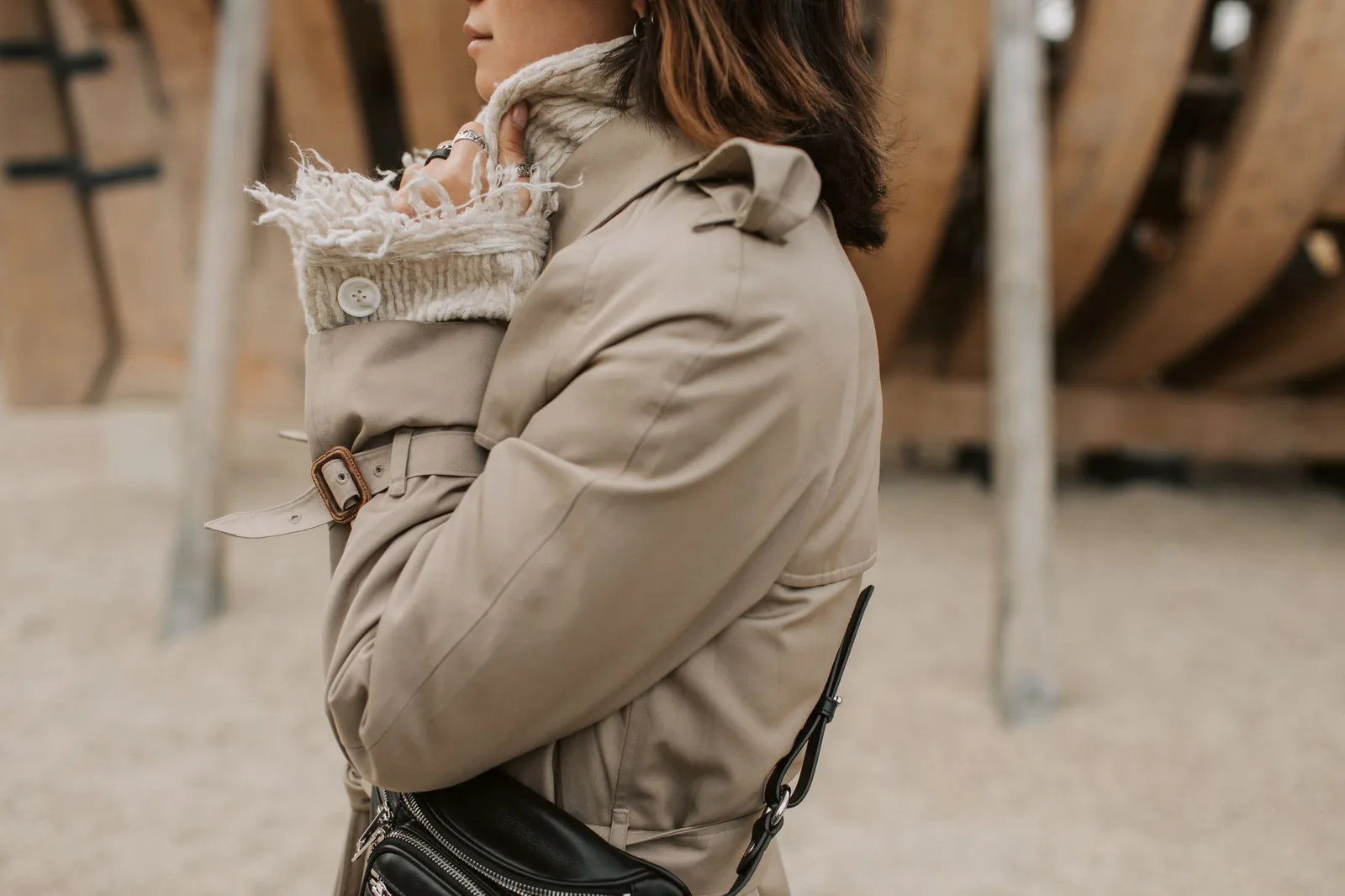
Crossbody or shoulder bag. The middle option and the most useful for everyday. Enough capacity for essentials, keeps hands free, and the diagonal strap actually adds a line to an outfit rather than obscuring one.
What to look for regardless of type: stitched-and-reinforced strap attachment points, since that is where bags fail; a zipper that runs smoothly end to end; and a base that can take contact with the ground.
A plain canvas or nylon bag in a neutral does more work than a branded one, and costs a fraction. Bags are one of the categories where the logo premium is steepest.
The small stuff
Socks. Visible between hem and shoe on most modern trousers, so they are participating whether you planned it or not. Matching them to the trouser lengthens the leg line; contrasting them deliberately is a choice; a worn-out white sports sock under a considered outfit is the most common small failure in this whole article.
Belts. Functional first. If the trousers stay up without one, a belt is optional and mainly adds a horizontal line at the waist — useful when you want to define one, unnecessary when you do not. Match leather to the shoe if both are leather; this is one of the few old rules that still reads correctly when broken.
Watches. The only accessory in this list that people notice on other people. A simple one in a neutral case works with everything.
Jewelry. Beyond the scope of a practical guide, except for one structural point: metal tones should be consistent within an outfit. Mixed metals can work but require it to be obviously intentional.
Keeping them wearable
Accessories take more abuse than most clothing and get maintained less, largely because nobody thinks of a hat as laundry.
Caps. Sweat and body oils accumulate in the sweatband and eventually stain the front panel from the inside out. Spot-clean the band with a little mild detergent on a cloth and let it air dry over something that holds the crown shape. Never in a machine, and never in a dryer — the stiffener in a structured brim can warp permanently.
Beanies. Wool wants cool water, no agitation, and drying flat. Machine agitation plus heat is how wool felts, and a felted beanie is a smaller, denser beanie forever.
Canvas bags. Washable, and most of them survive a gentle cold cycle. Remove anything metal or leather first if you can. Air dry.
Leather anything. Wipe with a damp cloth, condition occasionally, keep away from radiators.
The general principle is identical to the one that governs garments and footwear: low heat, low agitation, and dealing with dirt before it sets.
How accessories affect proportion
Worth stating because it is the thing most guides skip: accessories are volume and color, and they follow the same rules as garments.
A large bag adds visual mass at the hip or the back. A cap adds height. A bulky scarf adds width at the shoulders and shortens the neck. Each of these changes the outfit's outline, and an outfit that was balanced before can stop being balanced once something is added.
The practical version: if the outfit already has a strong element — an oversized top, a bold color, a heavy boot — accessories should be quiet. If the outfit is plain, one accessory can carry it. This is the same one-volume-at-a-time principle applied to things that are not garments.
The test
Before buying an accessory, one question: would I use this if it were invisible?
A bag you would carry regardless, a hat that keeps sun off, a beanie that keeps you warm — those earn their place and improve the outfit as a side effect. Something bought purely to complete a look tends to get worn twice.
That standard rules out a lot of what gets sold as accessories, and it is why this list is short. Four categories, chosen well, cover essentially everything most people need, and each one is cheap enough that buying properly does not require much of a budget — which matters when the budget is better spent on the garments doing the heavy lifting.