

There is a specific week every year when the temperature drops for the first time and nobody is ready. Summer clothes are wrong, winter clothes are excessive, and most people end up either cold or overheated inside.
Layering solves this, but not in the way it usually gets described. The point is not wearing more things. It is being able to remove one thing and still have a functional outfit.
Three layers, three jobs
Each layer does something specific, and understanding what makes the difference between a system and a pile.
Base layer: manage moisture. This sits against the skin. Its job is to move sweat away from you, because damp fabric against skin is what makes you cold once you stop moving. A cotton tee is comfortable and is genuinely poor at this — cotton holds moisture rather than moving it. For a walk to the train it does not matter. For anything involving exertion, it does.
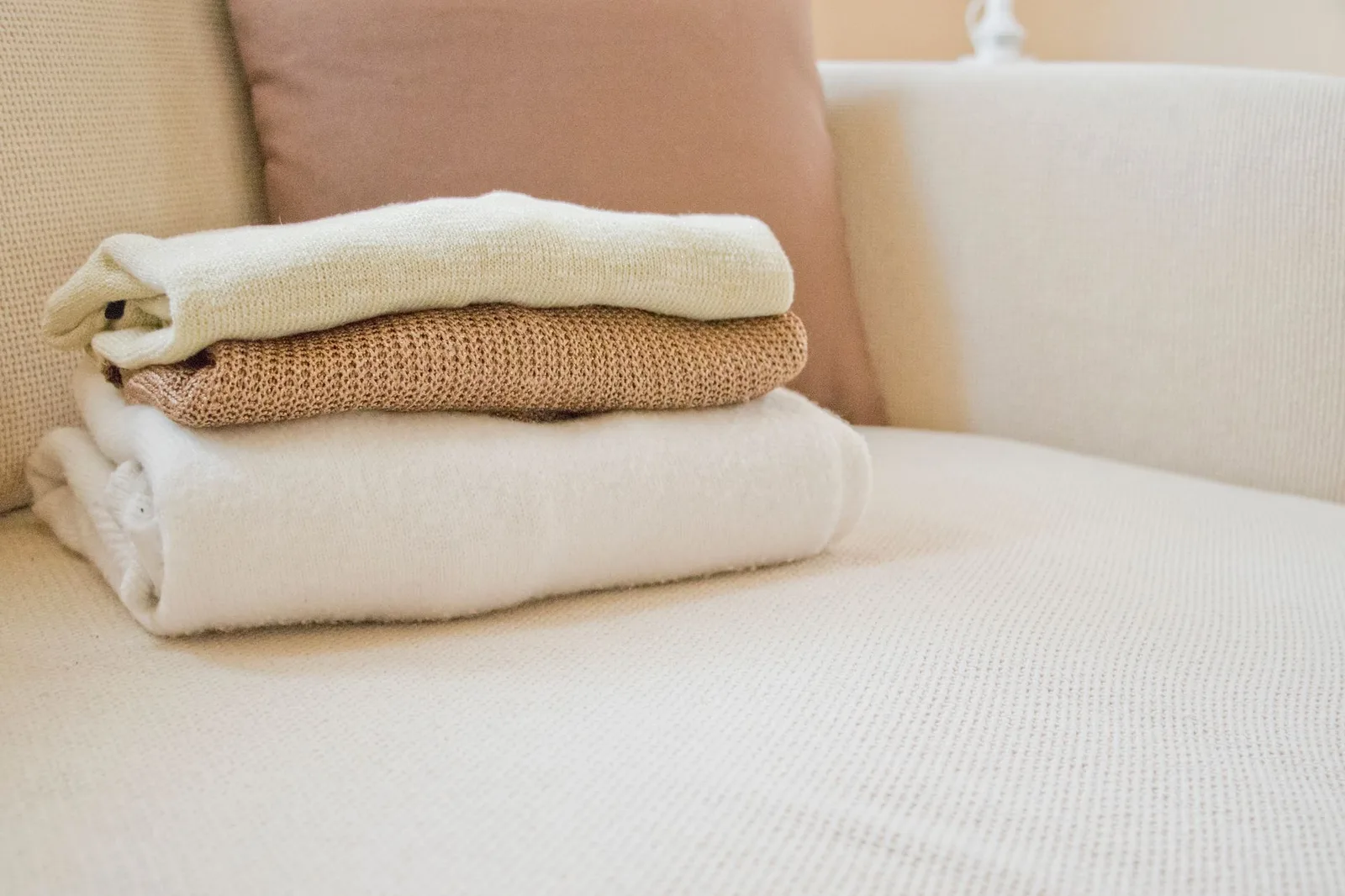
Mid layer: hold warmth. This is insulation. A hoodie, a sweatshirt, a knit. It works by trapping air, which means it needs a little room to loft. Compress it under something tight and it stops insulating.
Outer layer: block wind and water. Wind strips away the warm air your mid layer is holding, and it does this fast. A thin windproof shell over a fleece is warmer than a thick unprotected sweater in any real wind.
Most people layer wrong by doubling up on the mid layer — two sweatshirts, no shell — and then wondering why they are cold in a breeze.
Size from the inside out
This is the practical part that gets skipped, and it is the difference between layers that work and layers that are just bulk.
Each layer has to fit over the one beneath it without compressing it. That means:
- Base layer close to the body. Not tight, but not loose enough to bunch.
- Mid layer with enough room to sit over the base without pulling.
- Outer layer sized while wearing the mid layer.
That last one is where it usually goes wrong. A jacket bought on its own in a shop, over a T-shirt, will not close comfortably over a hoodie. If you plan to wear a jacket over fleece, try it on over fleece.
Hoodies in particular add real bulk through the shoulders and upper back, plus the hood itself, which has to go somewhere under a collar. Sizing a jacket for a hoodie usually means going up one from your shirt size — which is the same reasoning that applies to sizing generally.
Length is the thing nobody checks
Layers should get shorter as they go outward, or at least not longer.
If your mid layer hangs below your jacket, the outfit reads unresolved and the exposed hem gets wet and dirty. A tee that extends past a hoodie has the same effect at a smaller scale.
The clean version:
- Base layer shortest or equal.
- Mid layer at or slightly above the jacket hem.
- Outer layer longest.
There are deliberate exceptions — a long shirt worn intentionally under a cropped jacket is a look — but it has to be obviously on purpose, which usually means a clear contrast in color or fabric rather than a half inch of accidental overhang.
Necklines stack too
Three round necklines in a row looks like three round necklines in a row. Varying them adds depth without adding a single garment:
- Crew tee under a quarter-zip.
- Crew tee under a hooded sweatshirt, jacket with a collar over it.
- Higher neck under an open shirt jacket.
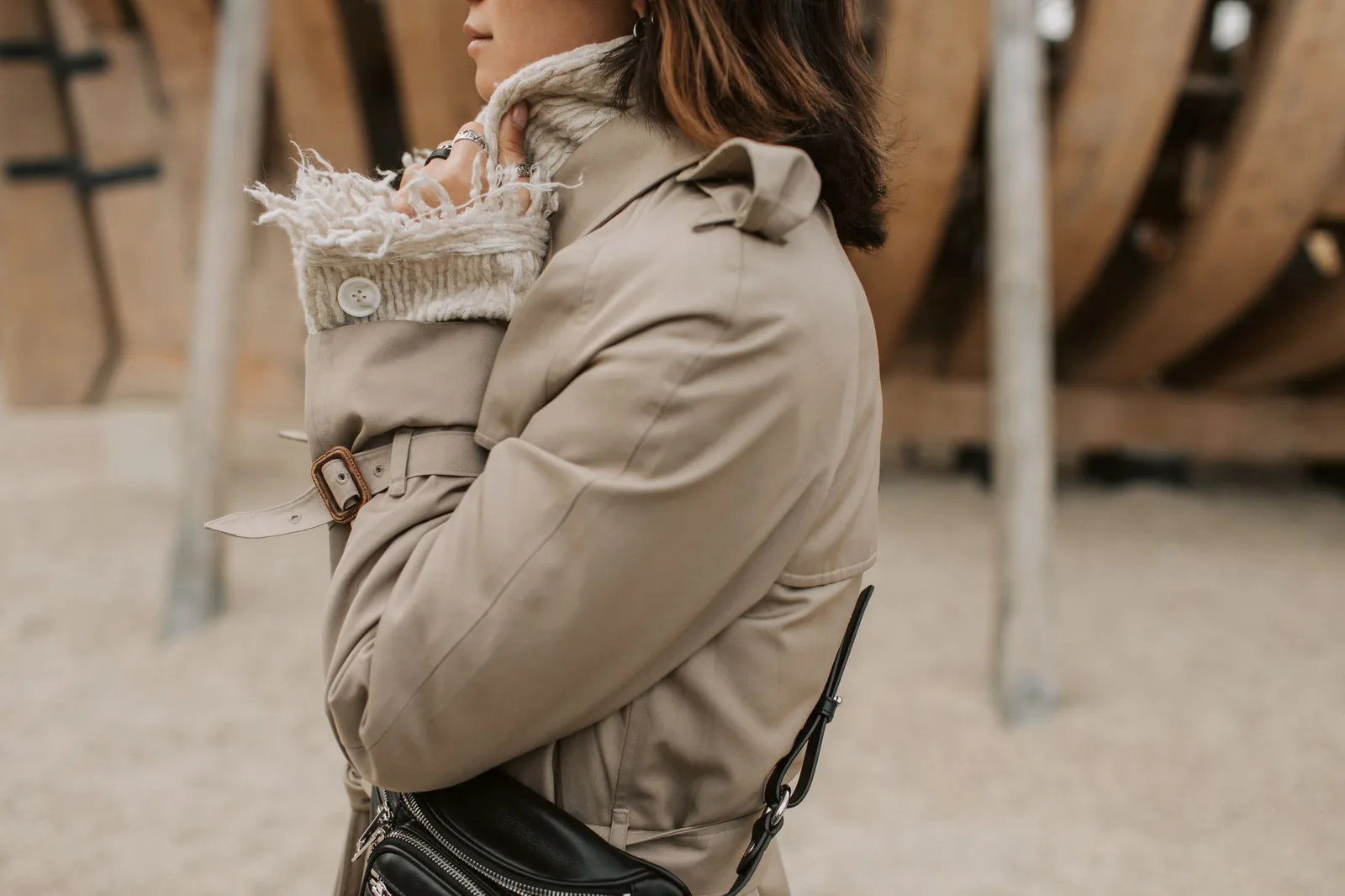
The general principle is that each layer outward should reveal a little of the one underneath. That is what makes layering read as considered rather than as everything being worn at once.
Weight distribution
An outfit where all the visual weight is up top and the legs are in something thin looks unbalanced, and it is also just cold.
If you are wearing a heavy jacket and a fleece, the bottom half needs to keep up — heavier trousers, a denser fabric. This is partly aesthetic and partly practical, since legs get the same wind everything else does.
Fabric choices by layer
The material matters as much as the count, and the differences are straightforward.
For base layers: merino wool moves moisture and resists odor well, which is why it dominates outdoor clothing. Synthetics dry fastest and cost least. Cotton is the most comfortable against skin and the worst performer once damp. Pick based on whether you will sweat.
For mid layers: cotton fleece is warm, heavy, and slow to dry. Wool insulates even when damp. Synthetic fleece is light and dries quickly but holds odor. A cotton hoodie is a fine mid layer for a commute and a poor one for a hike, and the reason is entirely about moisture. What makes a hoodie warm is mostly the loft of the fleece interior rather than the weight of the shell.
For outer layers: the question is whether you need breathability. A fully waterproof shell traps your own moisture unless it is designed to vent. For most transitional weather, a tightly woven cotton or a light unlined jacket blocks enough wind without turning into a plastic bag.
The indoor problem
Layering for outdoors is the easy half. The real constraint most days is that you are outside for twenty minutes and inside for eight hours.
This is the strongest argument for the three-layer system over one thick coat: a heavy insulated jacket is either on or off, and there is nothing in between. Three lighter layers give you four states — everything on, shell off, mid layer off, base only — and one of them will be right for whatever room you end up in.
It is also why the mid layer should be something you do not mind being seen in on its own. A hoodie or a knit works. A fleece with a technical logo across the chest works considerably less well in an office.
A workable transitional kit
For the stretch of the year between genuinely warm and genuinely cold, five pieces cover almost everything:
- A midweight tee that works alone or as a base.
- A long-sleeve or light knit for days that only need one extra layer.
- A hooded sweatshirt for actual insulation.
- An unlined jacket or overshirt that fits over the hoodie.
- Trousers in a fabric with some substance to them.
That combination handles roughly 40°F to 65°F depending on wind, and more importantly it handles a day that starts at one end of that range and finishes at the other. You take layers off as the day warms and the outfit still works, which is the actual test.
The tees are the base of this for most people, since a midweight tee is the piece doing double duty as both a standalone garment and a first layer. Beyond that, what is currently in stock changes with the season.
Common mistakes worth naming
- Cotton base layer for anything active. Fine for standing around, poor once you are working.
- Skipping the shell. Wind removes more warmth than most people account for.
- Buying the outer layer first. It is the piece whose size depends on everything else, so it should be bought last.
- Layering thin over thin over thin. Three light layers do not equal one insulating layer, and they compress each other.
- Ignoring the extremities. A hat does more for comfort than an extra mid layer, and takes up no space in a bag.
None of this requires a large wardrobe. It requires the pieces you already own to fit over each other in the right order, which is mostly a question of sizing them with the others in mind rather than buying each one in isolation.