

Buy the same shirt in two fabrics and you have bought two different garments. Same pattern, same measurements, same size on the label — and one hangs in soft folds while the other holds a shape a few inches off your body.
The variable is drape, and once you can see it, a lot of otherwise confusing outcomes make sense. It explains why a garment that looked one way online arrived looking another, and why an outfit that works in one season falls flat when you rebuild it in summer fabrics.
The two behaviors
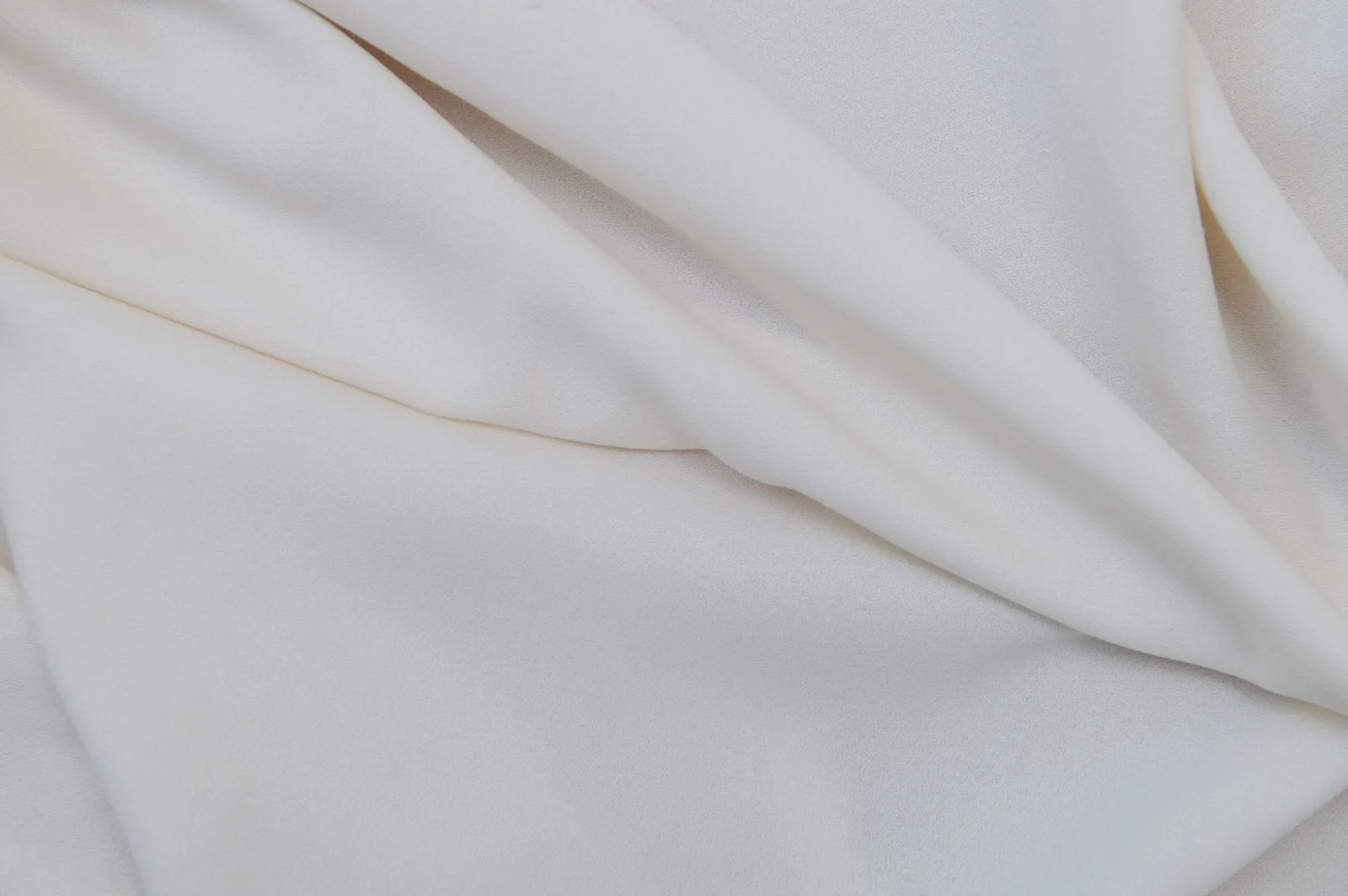
Drape is fabric following gravity and the body underneath. Draping fabrics fall into soft vertical folds, move when you move, and reveal the shape they are covering.
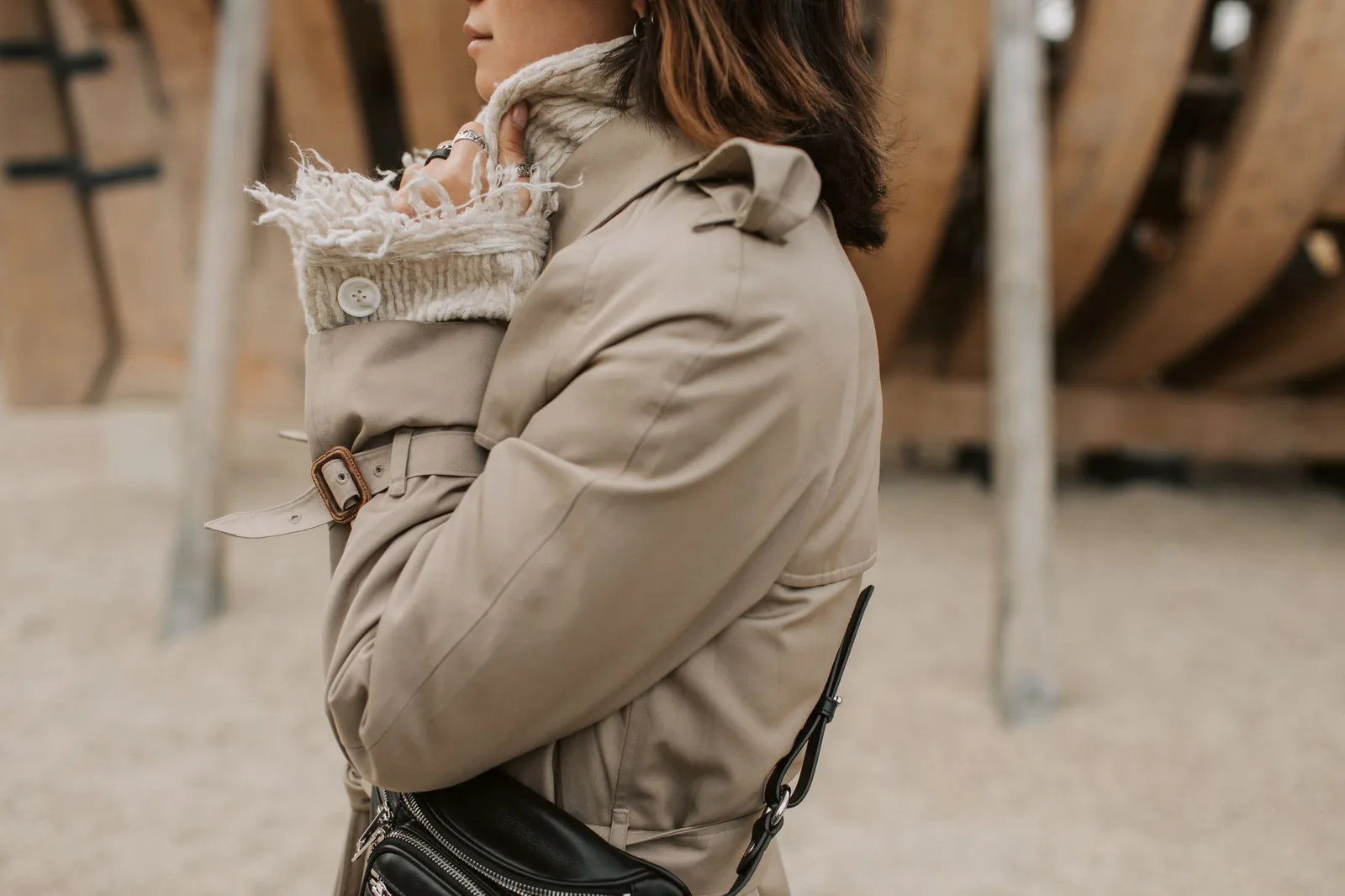
Structure is fabric holding its own form. Structured fabrics stand slightly away from the body, keep the shape the pattern gave them, and create an outline that is the garment's rather than yours.
Neither is better. They are different tools, and most well-composed outfits use both.
What produces each
Four things determine where a fabric lands, and they compound.
Fiber. Rayon, modal, silk and fine wool drape. Cotton canvas, denim, and heavy twill hold structure. Standard cotton jersey sits in the middle and can be pushed either way by the other three factors.
Weight. Heavier fabric of the same construction holds more structure. This is the most intuitive lever and the one product pages actually publish, though the weight number needs context to be useful.
Construction. A tight, dense weave resists bending. A loose or open knit collapses. Two fabrics at identical weight can behave oppositely because of how they are built.
Finishing. Mills apply treatments that stiffen or soften fabric. Garment washing and enzyme treatments break down structure deliberately, which is why a washed denim jacket drapes and a raw one stands up on its own.
Testing it by hand
You can assess drape in a shop in about five seconds.
- Pinch and release. Structured fabric holds the crease shape briefly. Draping fabric falls immediately.
- Hang it over your hand. Draping fabric forms narrow, close folds. Structured fabric makes broad, shallow curves or stays nearly flat.
- Look at the shoulder on a hanger. If the garment keeps a shoulder line without a body in it, it is structured.
- Lift a sleeve and drop it. Structured fabric swings as a unit. Draping fabric ripples.
Online, the clues are in the photography. Look at what the fabric does at the hem and the sleeve opening. Sharp, defined edges mean structure. Soft, irregular ones mean drape. A product shot on a hanger tells you more than one on a model.
What each is good for
Drape suits:
- Anything meant to skim rather than sit away from the body
- Wide-leg and flowing bottoms, where structure would read as stiff
- Layers worn under something else, since draping fabric adds no bulk
- Warm weather, where fabrics that follow the body are usually lighter anyway
Structure suits:
- Outerwear, which needs to hold shape over whatever is underneath
- Any deliberately oversized silhouette, since the shape is the point and collapsing fabric loses it
- Garments that need to look sharp — a defined shoulder requires fabric that can hold one
- Anything worn as the outermost layer, where the outline is doing the visual work
That second point is the one worth dwelling on. An oversized cut in a draping fabric does not read as oversized. It reads as baggy, because the fabric collapses onto the body instead of holding the volume the pattern drew. If the sculptural version is what you want, structure is a requirement rather than a preference.
Mixing them
The most reliable outfit formula in this whole area: one structured element, everything else draping.
A structured jacket over a soft tee and fluid trousers. A stiff, wide trouser with a fine knit. A heavy overshirt over a drapey base. The structured piece establishes the outline, and the draping pieces keep the outfit from looking like armor.
All structure is the failure people notice. Heavy jacket, rigid trouser, thick knit — the outfit is a set of boxes, and it looks stiff no matter how well each piece fits.
All drape is the failure people do not notice as quickly. Everything soft means nothing holds a line, and the whole outfit reads slouchy even when the pieces are good. This is the summer version of the same problem, and it is usually solved by one structured element: a canvas jacket, a stiff bag, a substantial shoe.
Where it interacts with fit
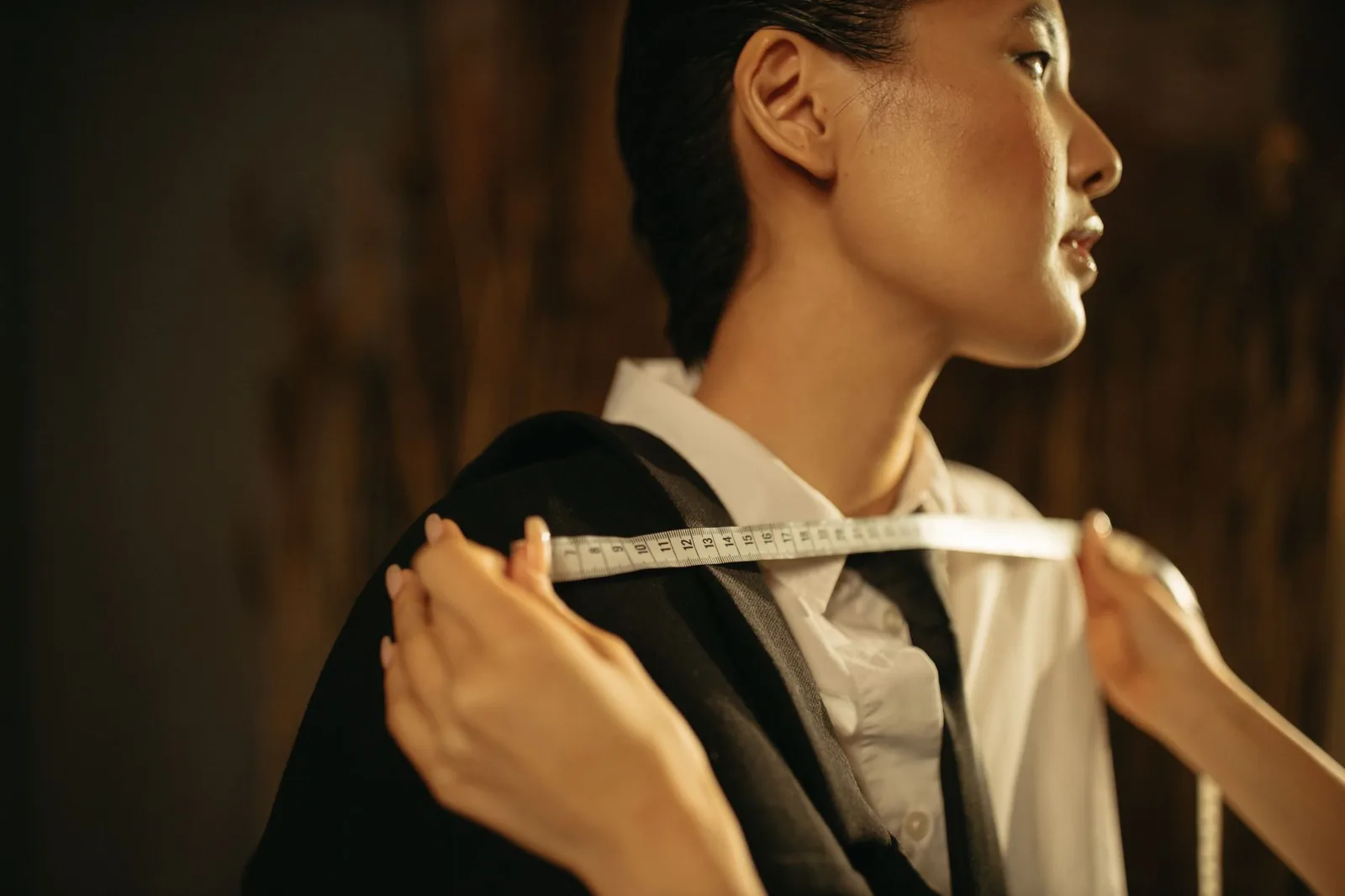
A structured fabric is less forgiving of a bad fit, because it will not adapt. If a structured jacket is tight across the back, it stays tight and pulls. A draping fabric in the same size accommodates.
That cuts both ways. Structure holds a good fit precisely; drape hides a mediocre one. When you are buying something structured, the measurements matter more, which is another reason to work from the size guide rather than the size letter.
How washing shifts a fabric over time
Drape is not fixed. Most fabrics move toward drape as they age, because washing gradually breaks down the finishes and relaxes the fibers that were holding structure.
A stiff canvas jacket softens over a year of wear. Raw denim starts rigid and ends up conforming to the wearer. A heavy cotton tee that stood away from the body when new sits closer after thirty washes.
This has two practical consequences.
Buy structured pieces slightly stiffer than you want them. They will soften. A jacket that feels perfectly broken-in on the rack will be limp within a season.
Heat accelerates it. Hot washing and tumble drying break down structure faster than cold washing and air drying, which is one more reason laundry habits determine how long a garment stays the garment you bought.
The exception is fabrics whose structure comes from weave density rather than finishing. Those hold up longer, because there is no applied treatment to wash out.
Seasonal shifting
Most wardrobes drift toward drape in summer and structure in winter, mainly as a side effect of weight. That is fine, but it is worth noticing, because it explains why a formula that worked in October stops working in June.
If your winter outfits rely on a structured coat to create their outline, the summer version of that outfit has lost its outline entirely. Replacing it usually means finding one lightweight structured piece — an unlined canvas overshirt, a stiff cotton jacket — rather than accepting that summer outfits are shapeless.
A note on knits
Knitwear sits slightly outside this framework, because a knit's drape is governed by its stitch structure more than by its weight.
A fine, tightly knitted jersey drapes. A chunky, loosely knitted piece has body and holds a shape, but it holds it softly — it is bulky without being crisp. That is a third category worth naming: volume without structure. It fills space the way a structured fabric does while behaving like a draping one when it moves.
Practically, a chunky knit can substitute for a structured layer in an outfit that needs one, provided the rest of the outfit is close to the body. It cannot create a sharp line, so it will not do the job a canvas jacket does.
The short version
Ask two questions about any garment: does this fabric follow the body or hold its own shape, and does this outfit already have something holding a shape?
If the answer to the second is no, the next thing you add should be structured. If the answer is yes, add drape, because a second structured piece is where outfits start looking rigid.
That single check catches most of what goes wrong when an outfit is made of good pieces and still does not work. It is also the reason fiber content is worth reading before you buy something you intend to build outfits around.